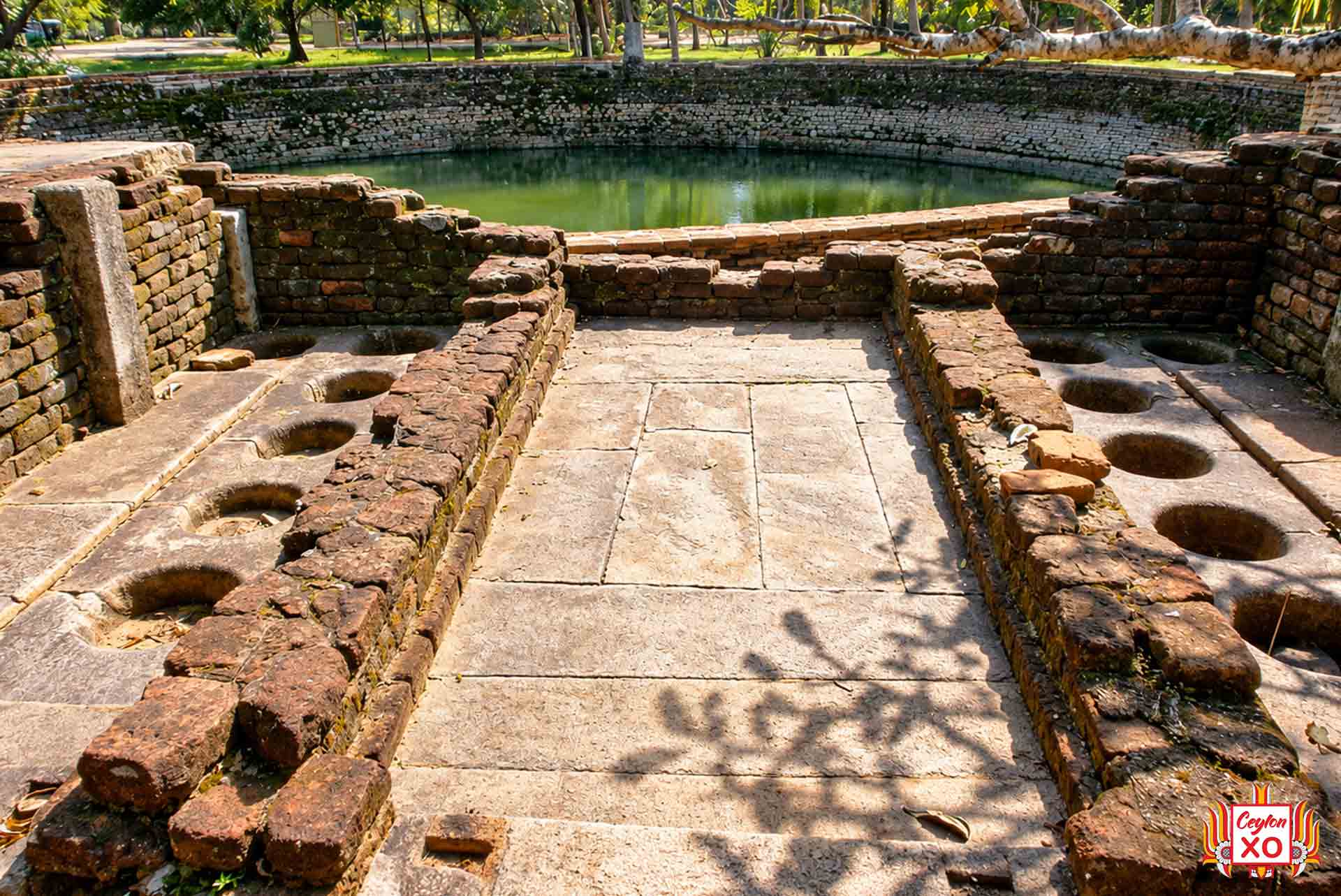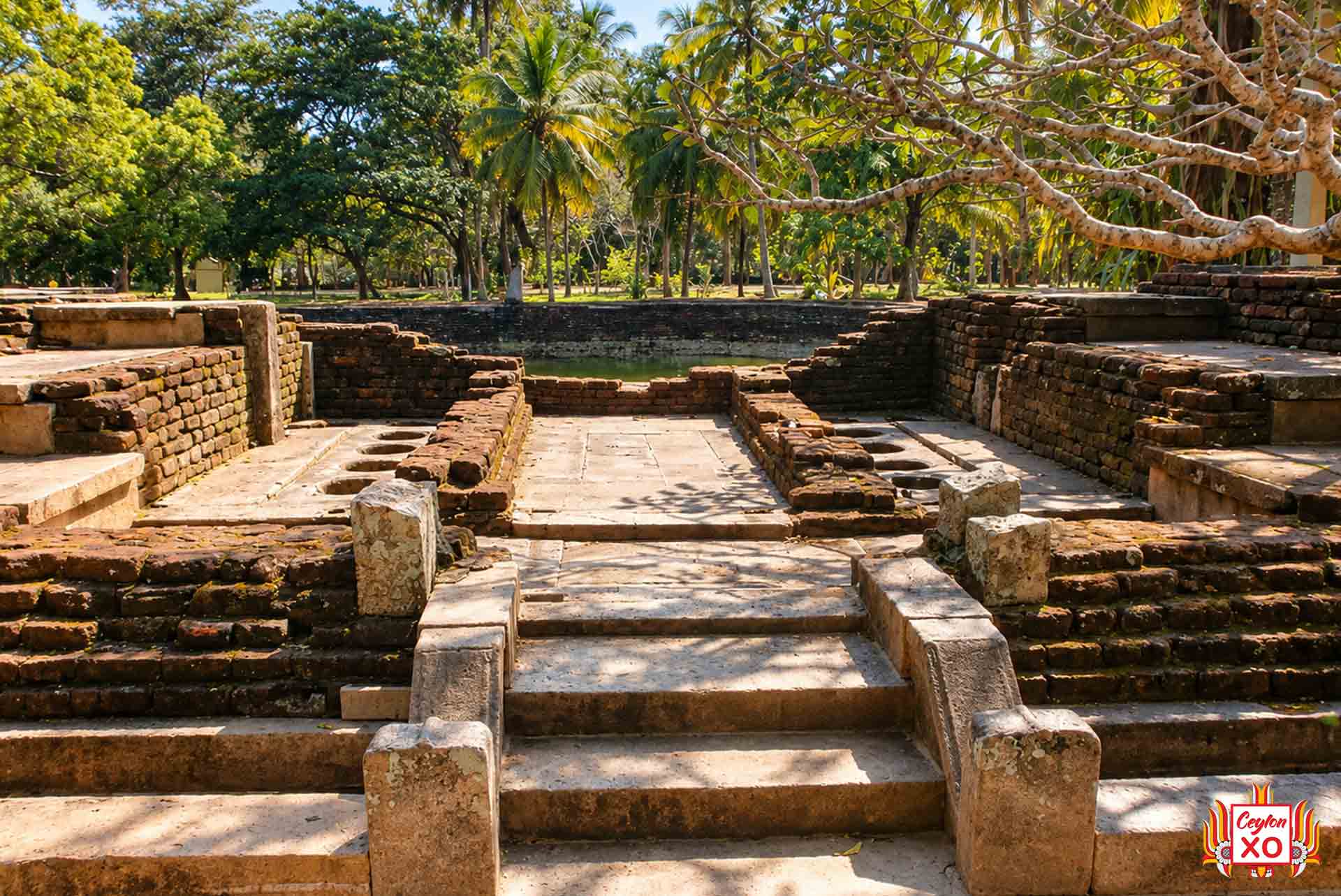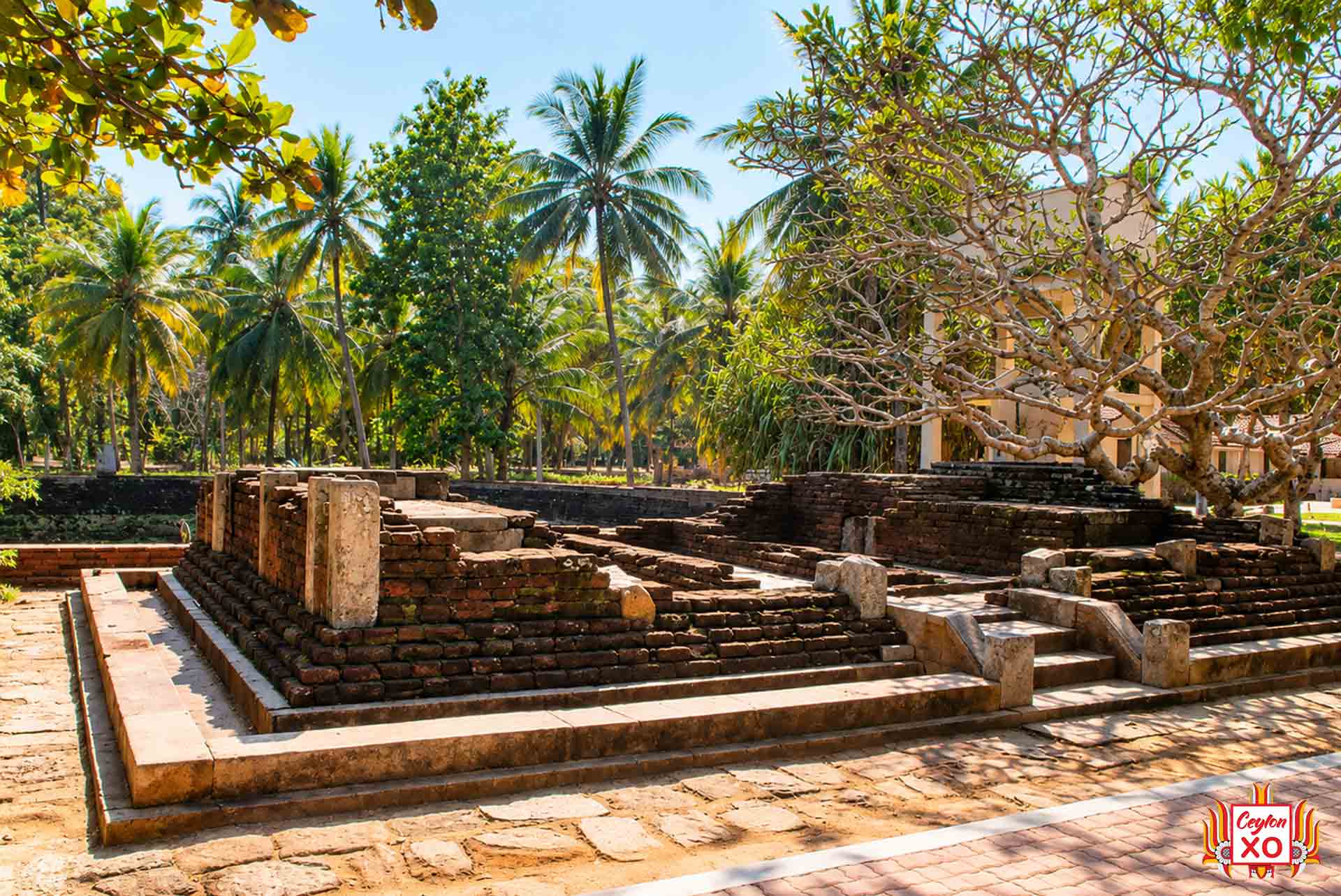
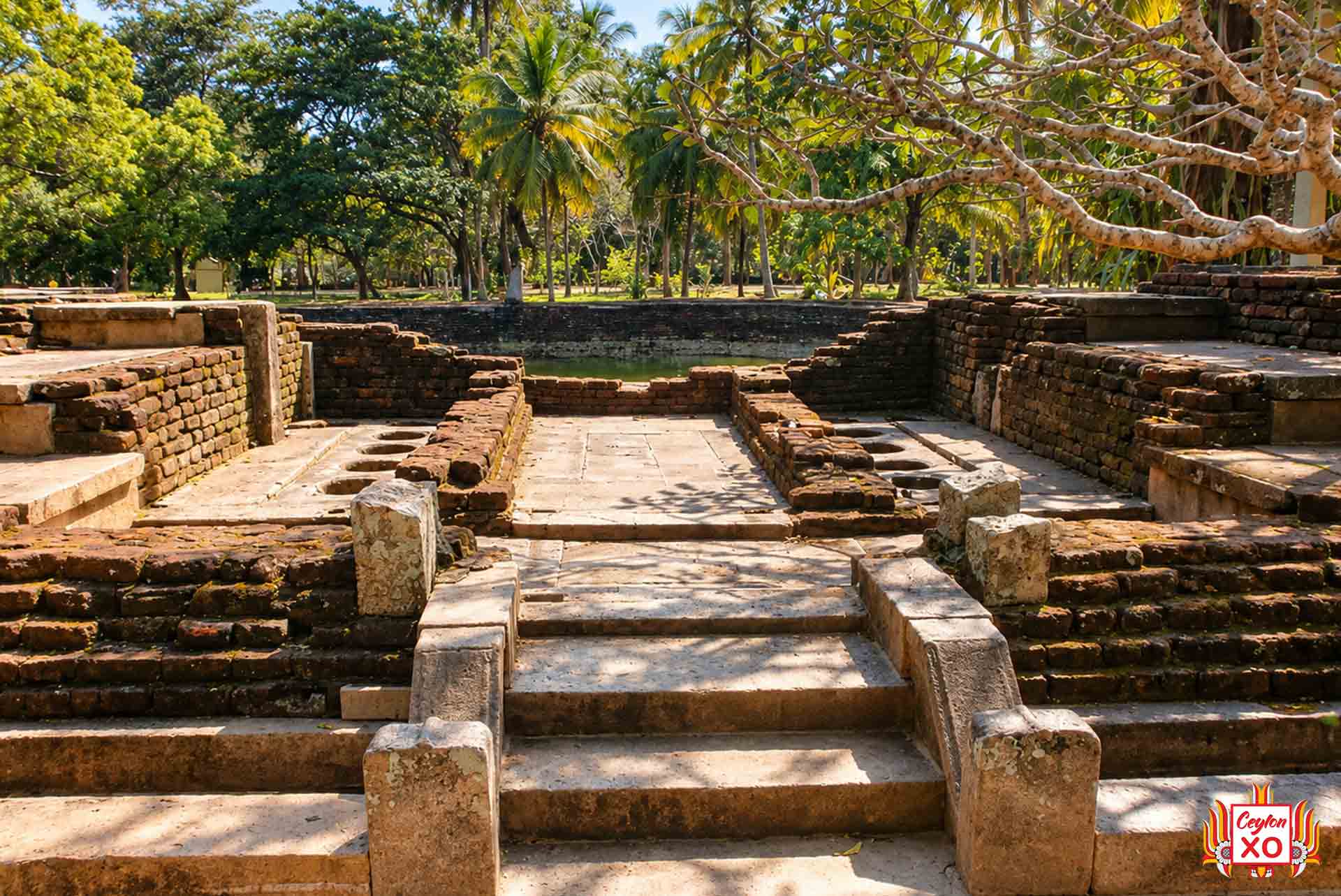
The hall is also known as the Abhisheka Mandapaya or Anointing Pavilion. It is believed to have been used for ceremonial anointing and consecration of Buddha and Bodhisattva statues with fragrant water, following ancient Buddhist ritual traditions. The practice symbolised reverence for sacred images and formed part of religious observances associated with Mahayana Buddhism. Although the building is now in ruins, its surviving features provide valuable clues about its original purpose. Gateway to Sri Lanka
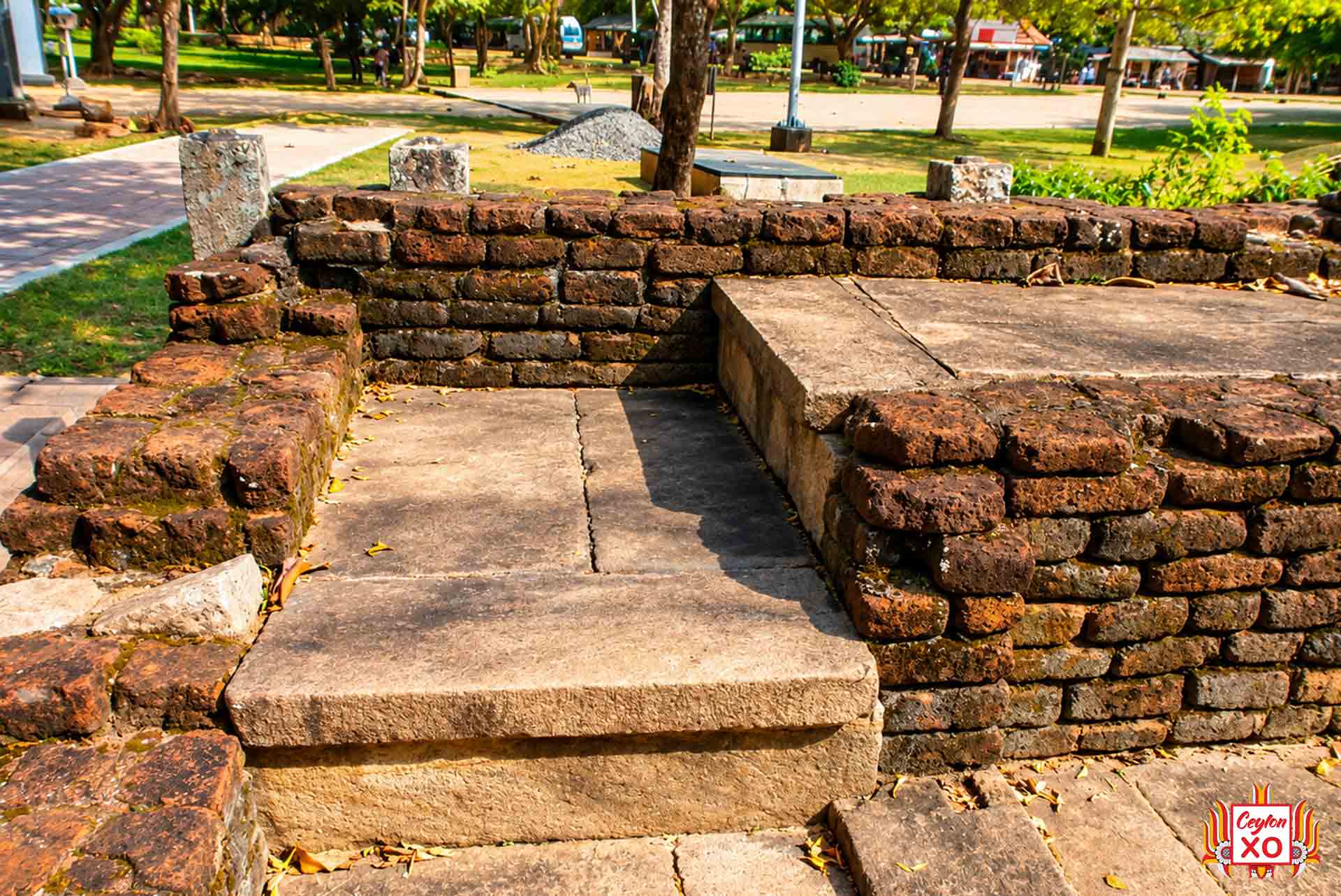
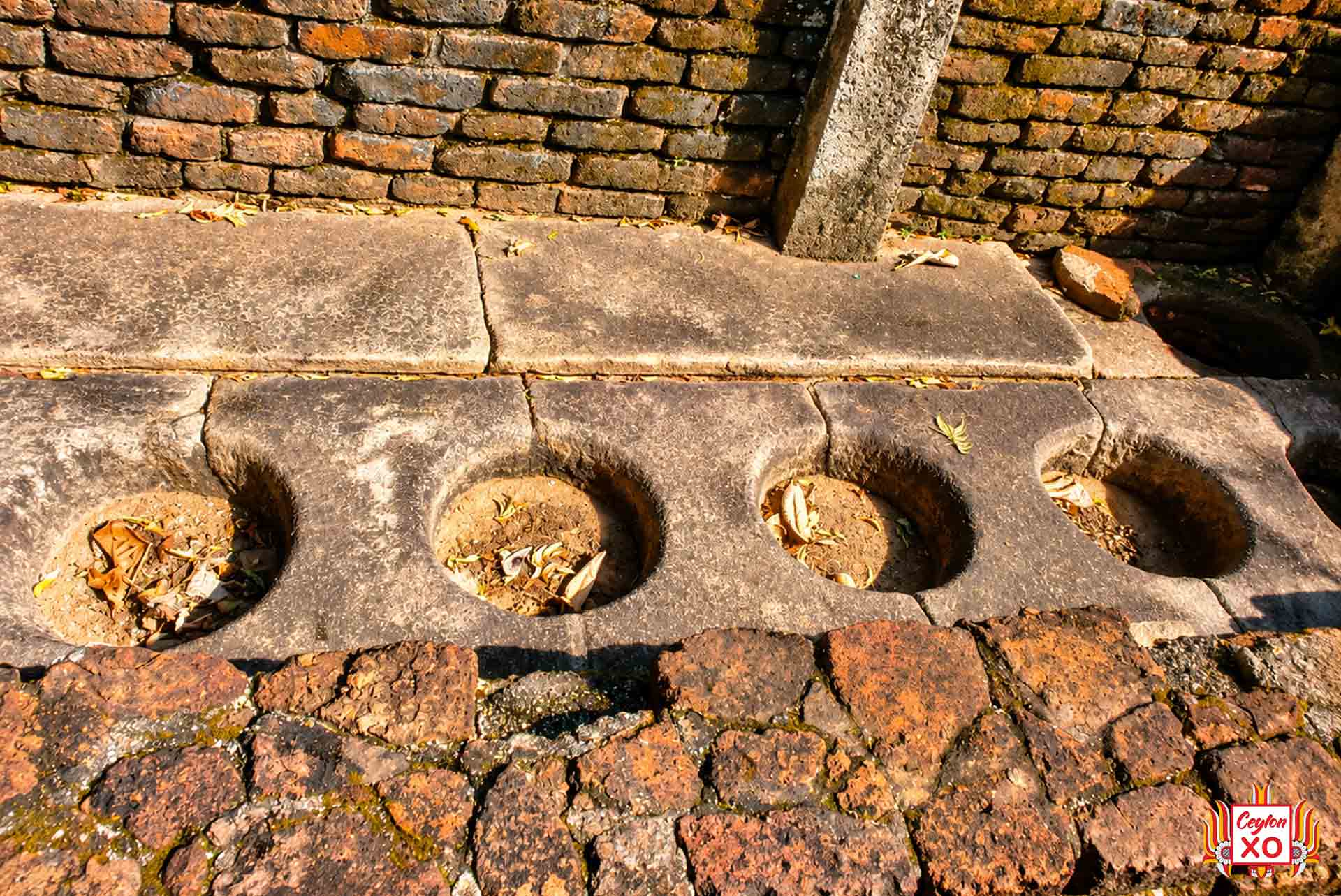
The remaining structure includes stone platforms, a stepped entrance, and stone channels designed to carry water away from the hall towards a nearby pond. Recesses in the stonework are believed to have held vessels containing the fragrant water used during the ceremonies. These architectural features demonstrate the careful planning and craftsmanship of ancient Sri Lankan builders. The pavilion is generally dated to the late Anuradhapura period. Gateway to Sri Lanka
Today, the Abhayagiri Anointing Hall is an important archaeological monument within the historic Abhayagiri Monastery complex. Its remains offer visitors an opportunity to learn about ancient Buddhist ceremonies, religious architecture, and the cultural traditions of Sri Lanka. Preserving this site helps protect the country's archaeological heritage and provides valuable insight into the religious life of the ancient Anuradhapura Kingdom.