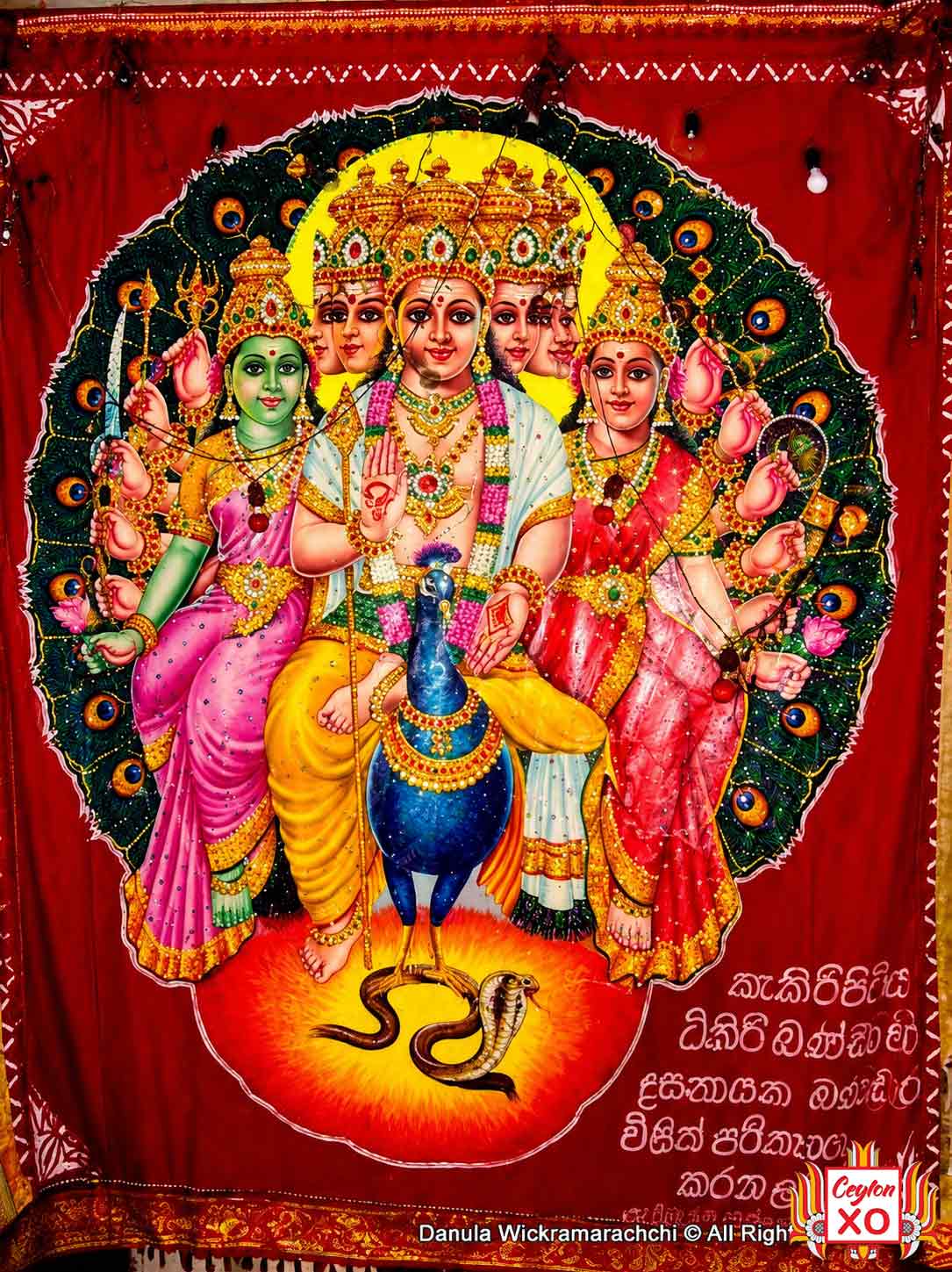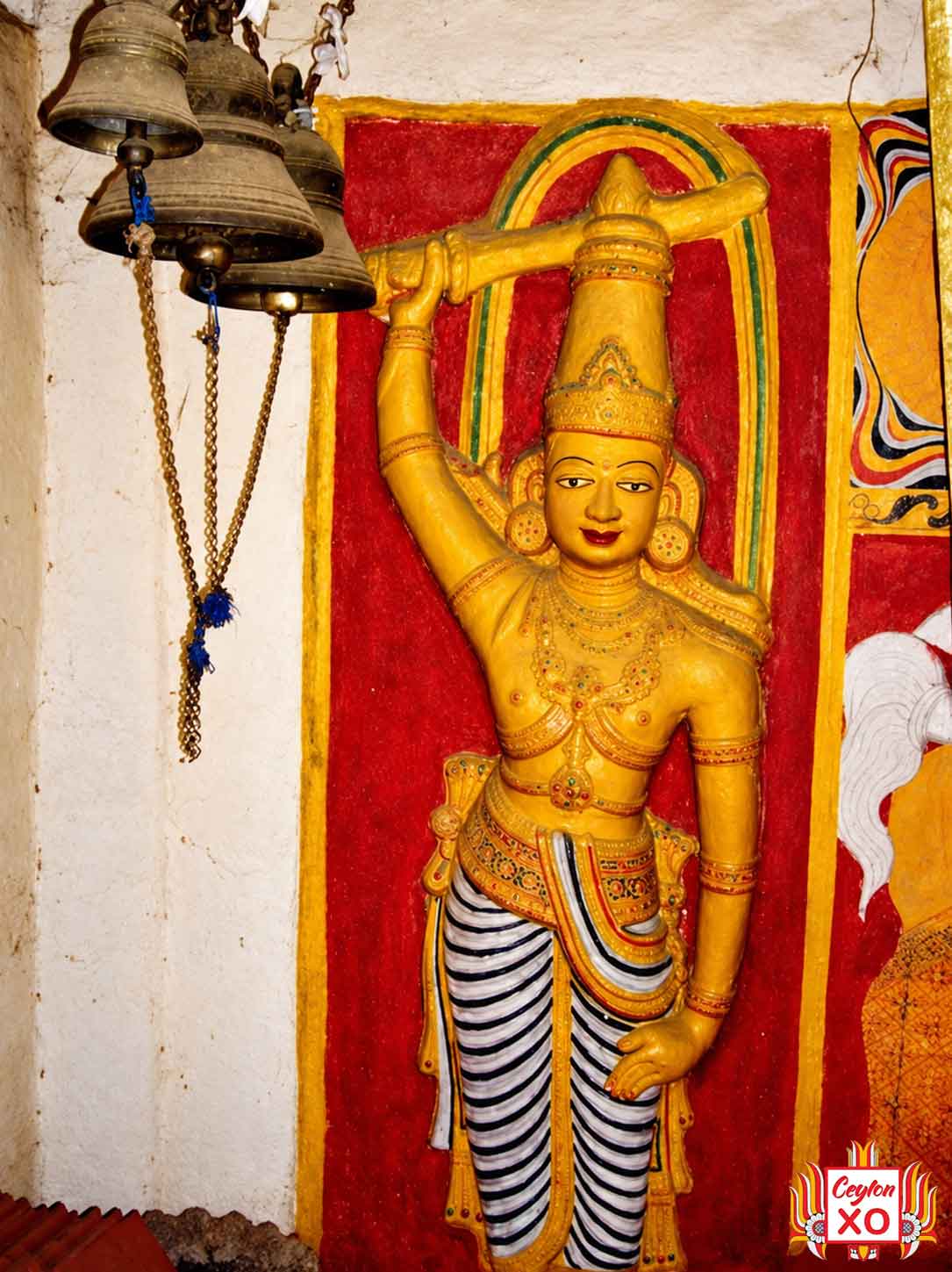
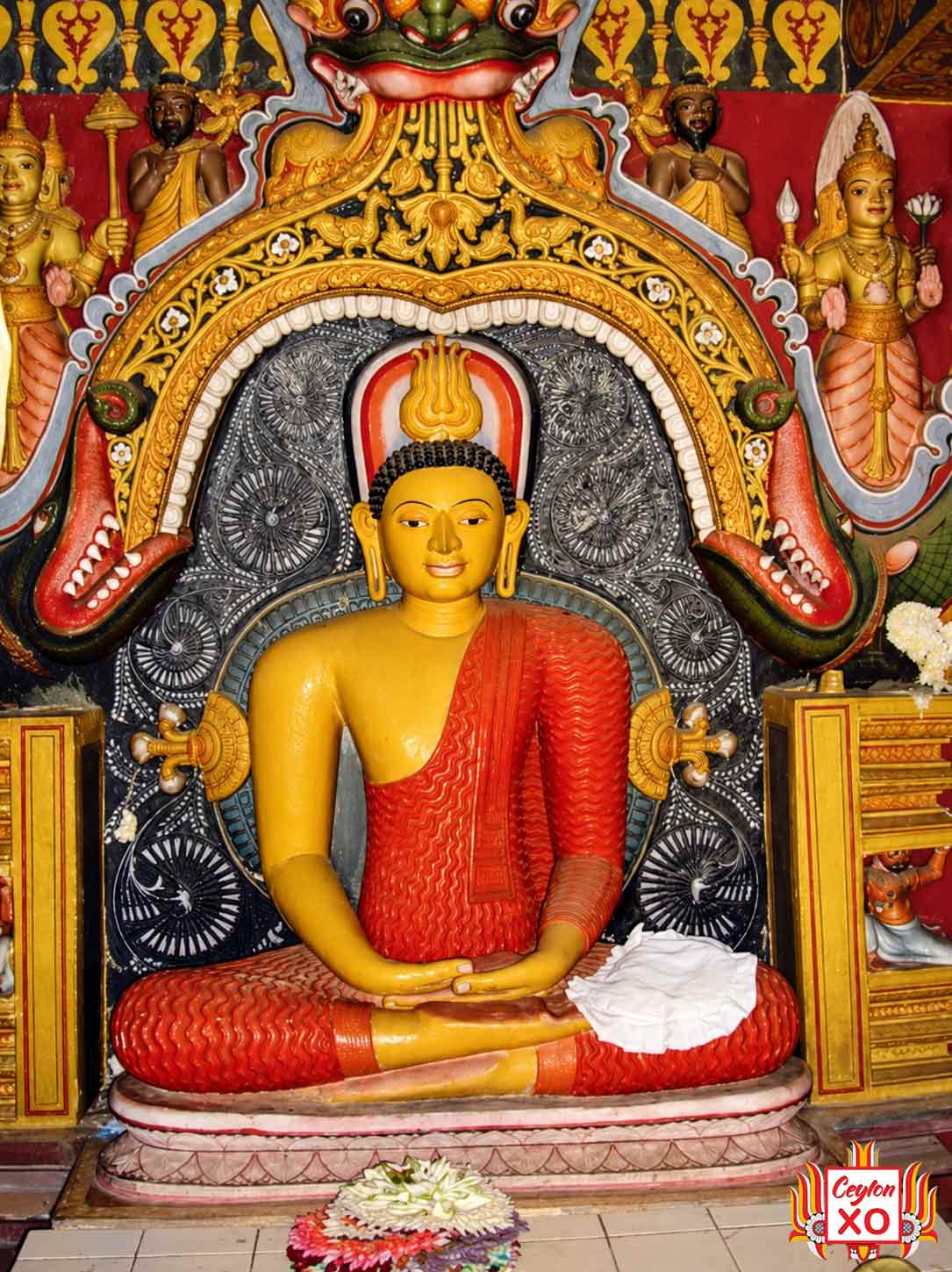
The history of Ambekke Devalaya dates back to the reign of King Vikramabahu III, who ruled the Gampola Kingdom from approximately 1357 to 1374 AD. The shrine is traditionally believed to have been constructed around 1371 AD under the patronage of the king. It was dedicated to God Kataragama, also known as Mahasen or Kataragama Deviyo, who is worshipped by both Buddhists and Hindus in Sri Lanka. A local deity known as Devatha Bandara is also associated with the shrine. The construction of Ambekke Devalaya reflects the close relationship between royal patronage, religious devotion, and artistic development during the Gampola period.
According to traditional legends, the establishment of Ambekke Devalaya is connected to Queen Henakanda Biso Bandara and a drummer from the village of Rangama. One popular story describes a drummer who suffered from a serious illness and was eventually cured after praying to God Kataragama. In gratitude for his recovery, he continued to worship the deity through drumming. It is believed that a divine vision later inspired the construction of a shrine dedicated to God Kataragama. Queen Henakanda Biso Bandara, who was devoted to the same deity, is also closely associated with the founding of the temple. These stories demonstrate the importance of religious beliefs, devotion, and folklore in the history of Ambekke Devalaya.
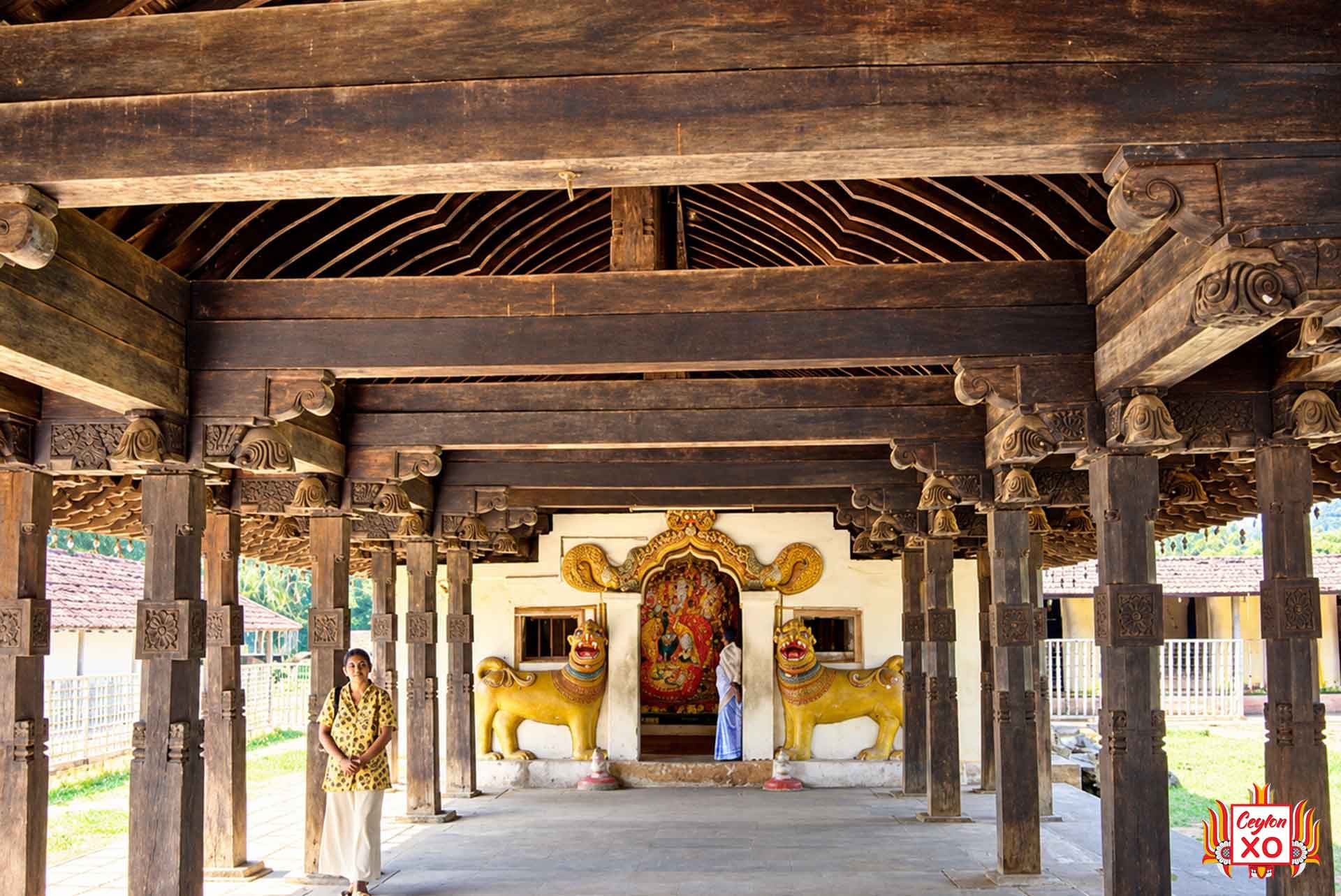
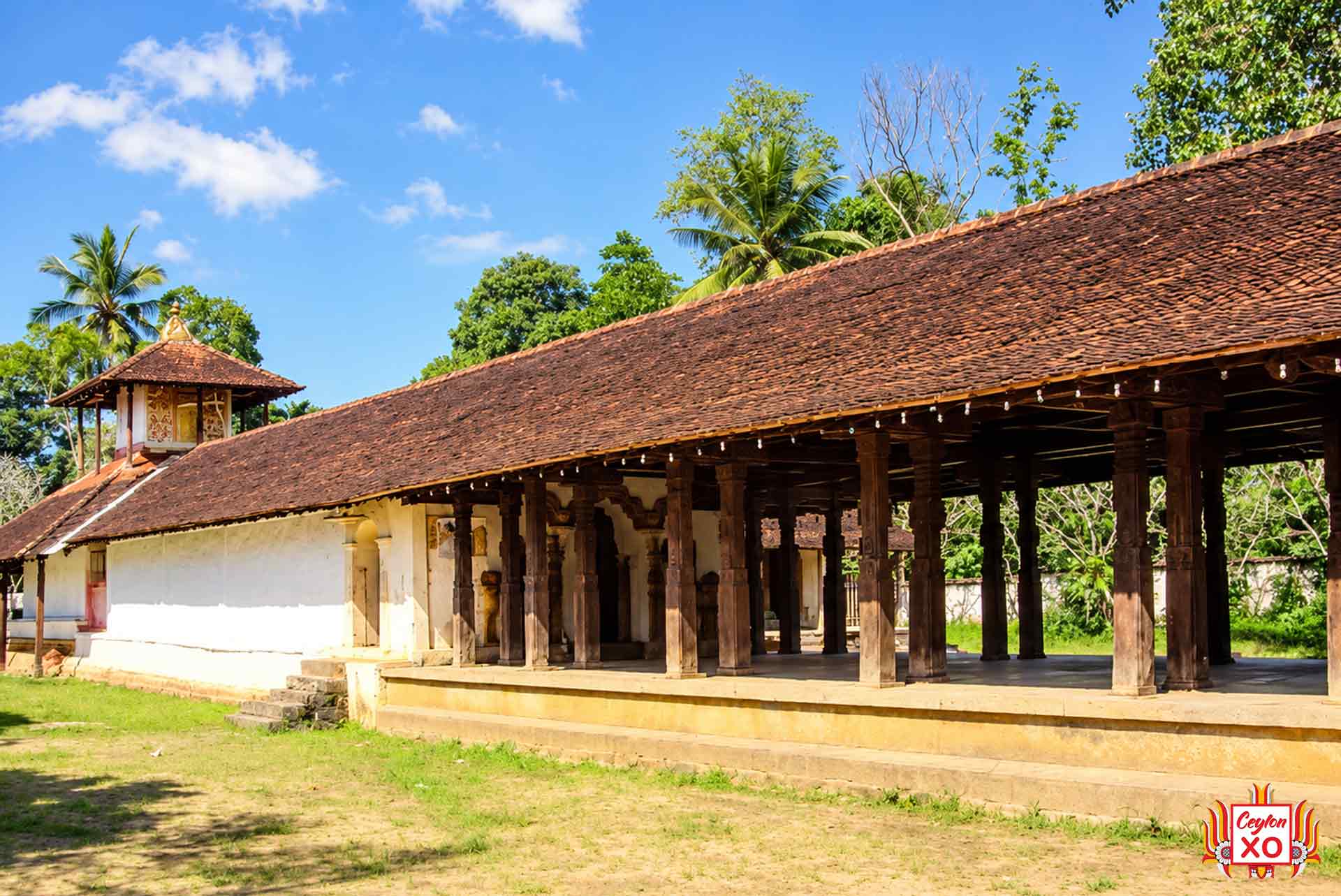
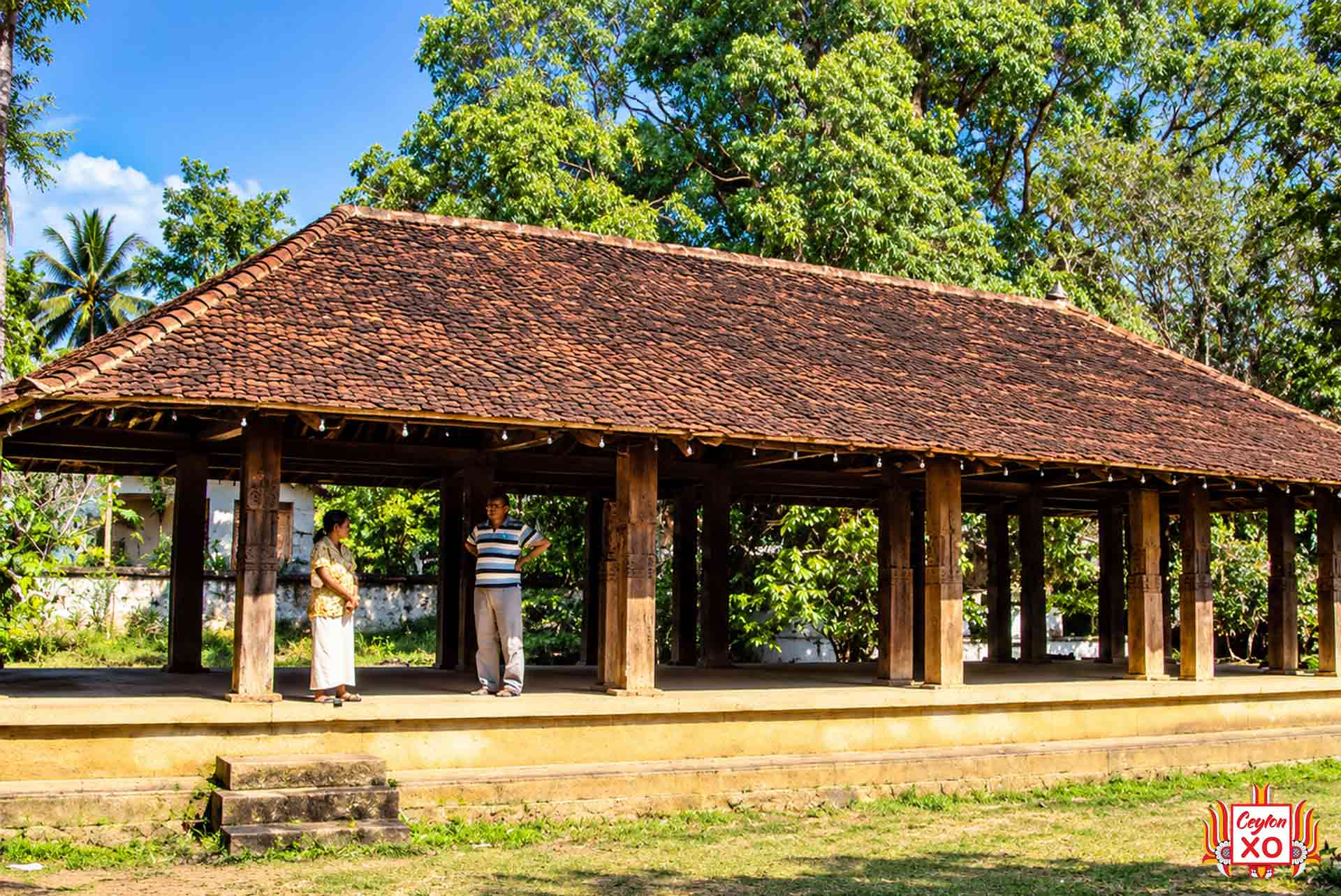
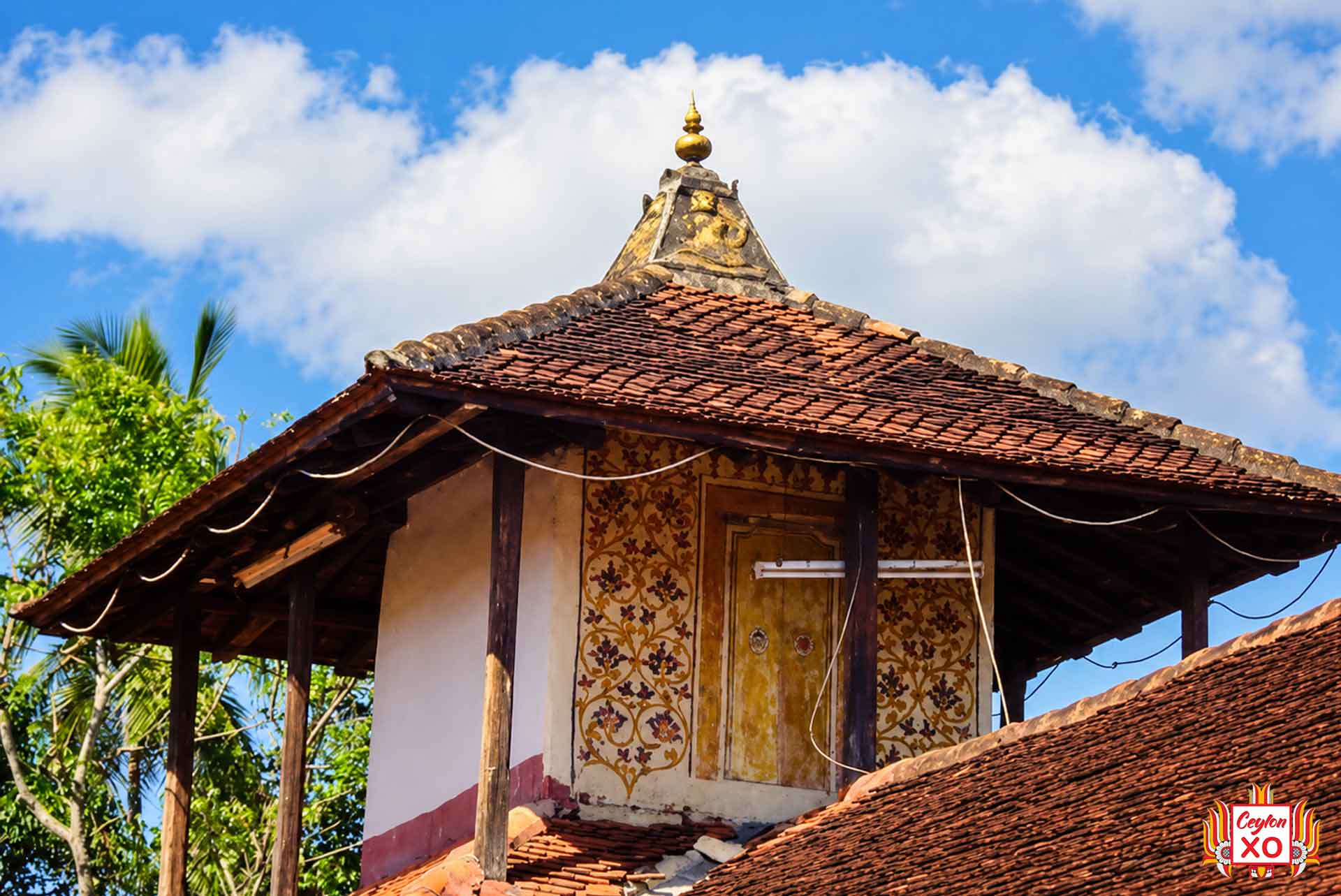
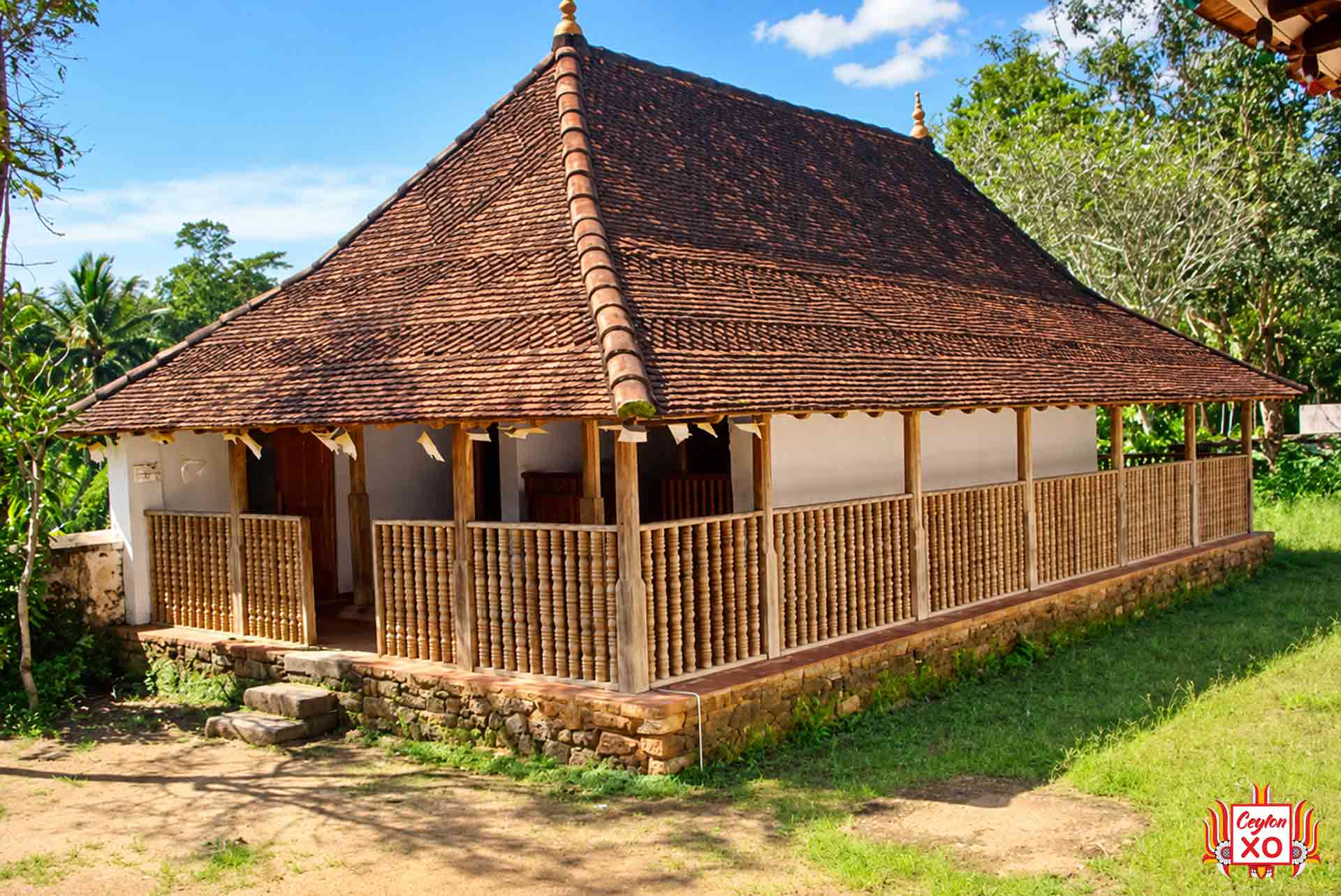
The architectural design of Ambekke Devalaya is one of its most distinctive characteristics. Unlike many ancient Sri Lankan religious buildings that are primarily constructed using stone or brick, Ambekke Devalaya is especially celebrated for its extensive use of timber. The structure demonstrates the advanced knowledge and technical abilities of ancient Sri Lankan carpenters and craftsmen. The main shrine consists of three important sections known as the Garbhaya, the Digge, and the Hevisi Mandapaya. The Garbhaya is the sacred inner chamber where the deity is worshipped, while the Digge serves as a ceremonial hall associated with traditional dancing and religious activities. The Hevisi Mandapaya, commonly referred to as the Drummers' Hall, is the most architecturally significant part of the monument.
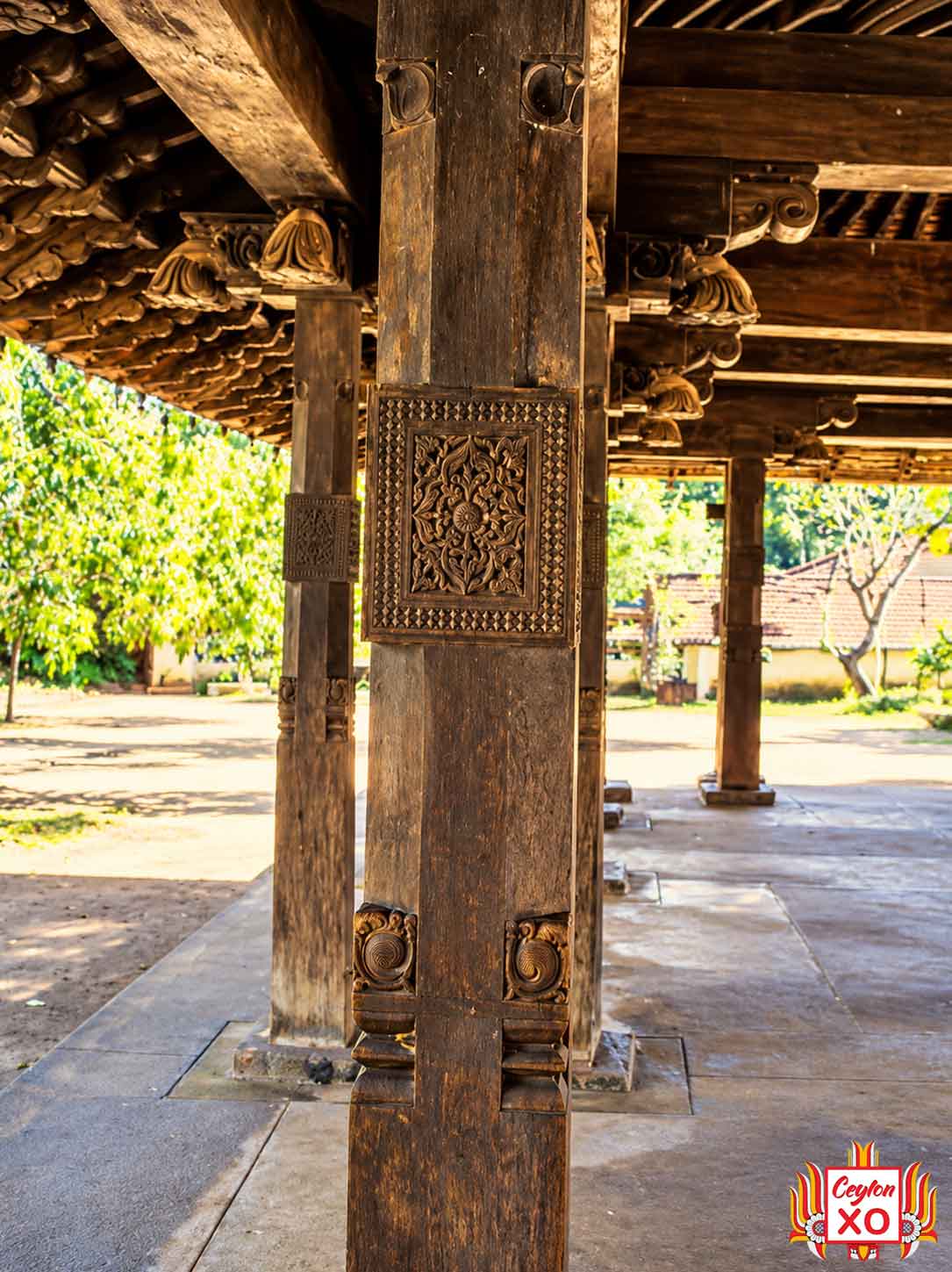
The Hevisi Mandapaya is particularly famous for its beautifully carved wooden pillars and extraordinary structural design. The hall is supported by 32 wooden pillars arranged on a raised stone foundation. Each pillar contains a collection of detailed carvings displaying the artistic imagination and technical precision of ancient craftsmen. These carvings represent animals, birds, flowers, mythical creatures, human figures, and traditional decorative patterns. Among the most recognised designs are the double-headed eagle, entwined swans, dancers, wrestlers, and various floral motifs. Some carvings also depict scenes from everyday life, providing valuable insights into the cultural practices and artistic traditions of medieval Sri Lanka.
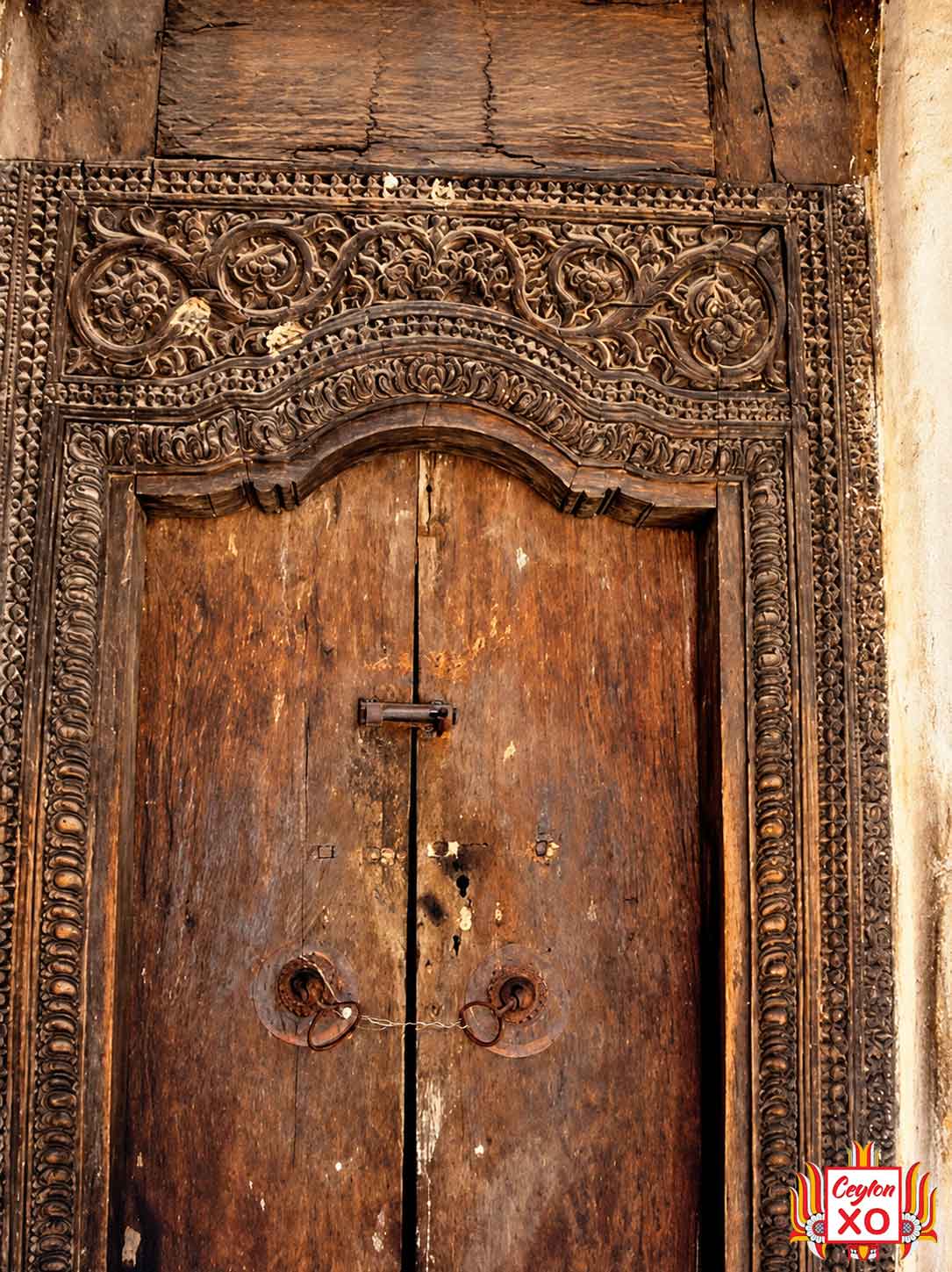
One of the most fascinating characteristics of the wood carvings at Ambekke Devalaya is their remarkable variety. The monument is commonly described as containing 514 decorative wooden carvings, including designs on pillars, beams, and roof brackets. The craftsmen displayed exceptional attention to detail, transforming ordinary wooden surfaces into elaborate artistic creations. Some carvings present realistic representations of humans and animals, while others incorporate imaginative combinations of different creatures. A particularly interesting example is a carving that can be interpreted as an elephant or a bull depending on the viewing angle. Such artistic creations demonstrate the creativity, intelligence, and advanced craftsmanship of the artisans who worked on the monument.
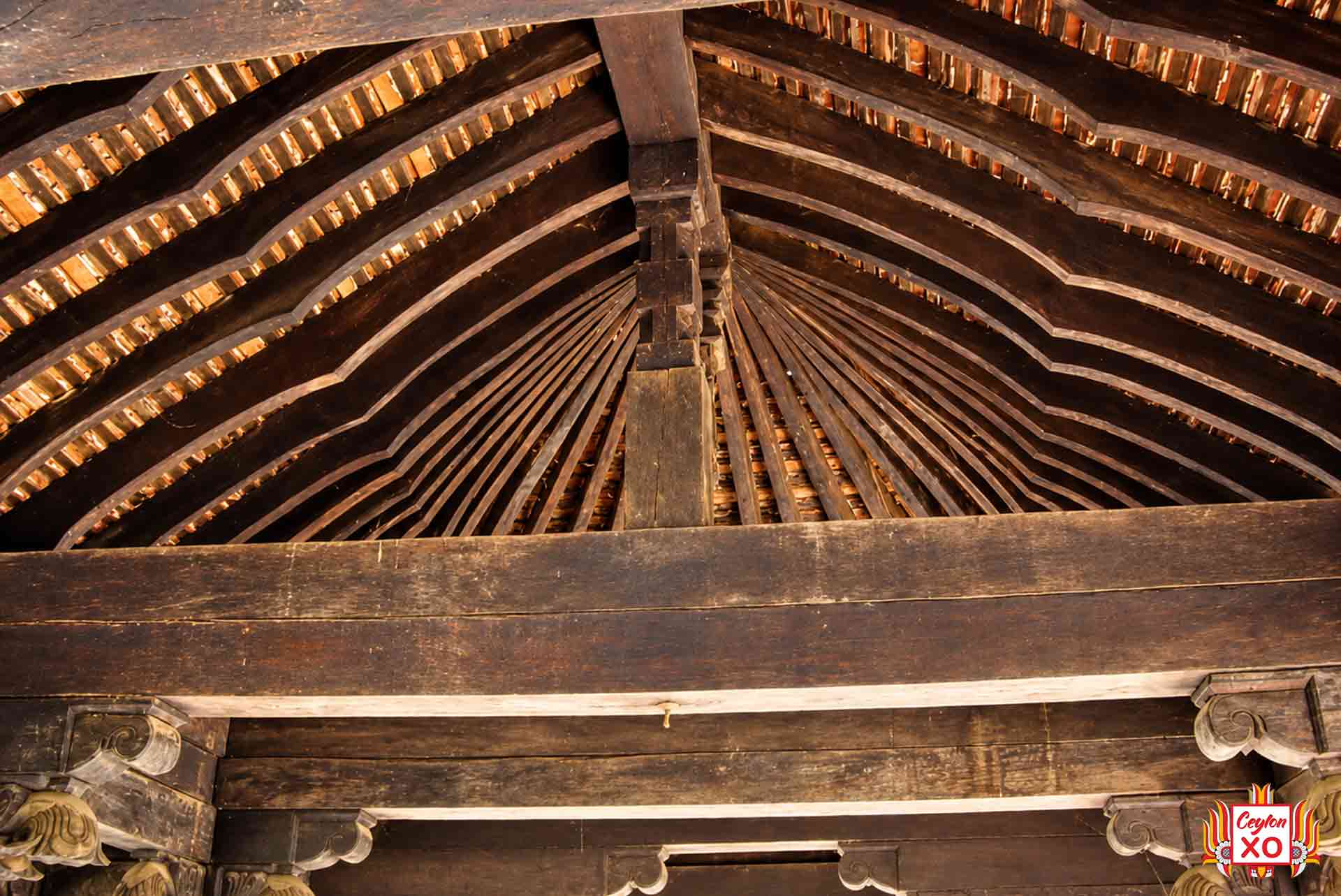
Another outstanding feature of Ambekke Devalaya is its traditional wooden roof construction. The roof is supported by an elaborate system of wooden beams and rafters that demonstrate the engineering knowledge of the Gampola period. A distinctive component known as the "Madol Kurupawa" plays an important role in the roof structure. It is a large wooden connecting piece that brings together 26 rafters, helping to hold the roof in position. This construction technique demonstrates the ability of ancient Sri Lankan builders to create stable and durable structures using traditional carpentry methods. The use of carefully designed wooden joints instead of modern metal fasteners is another remarkable characteristic of the building.