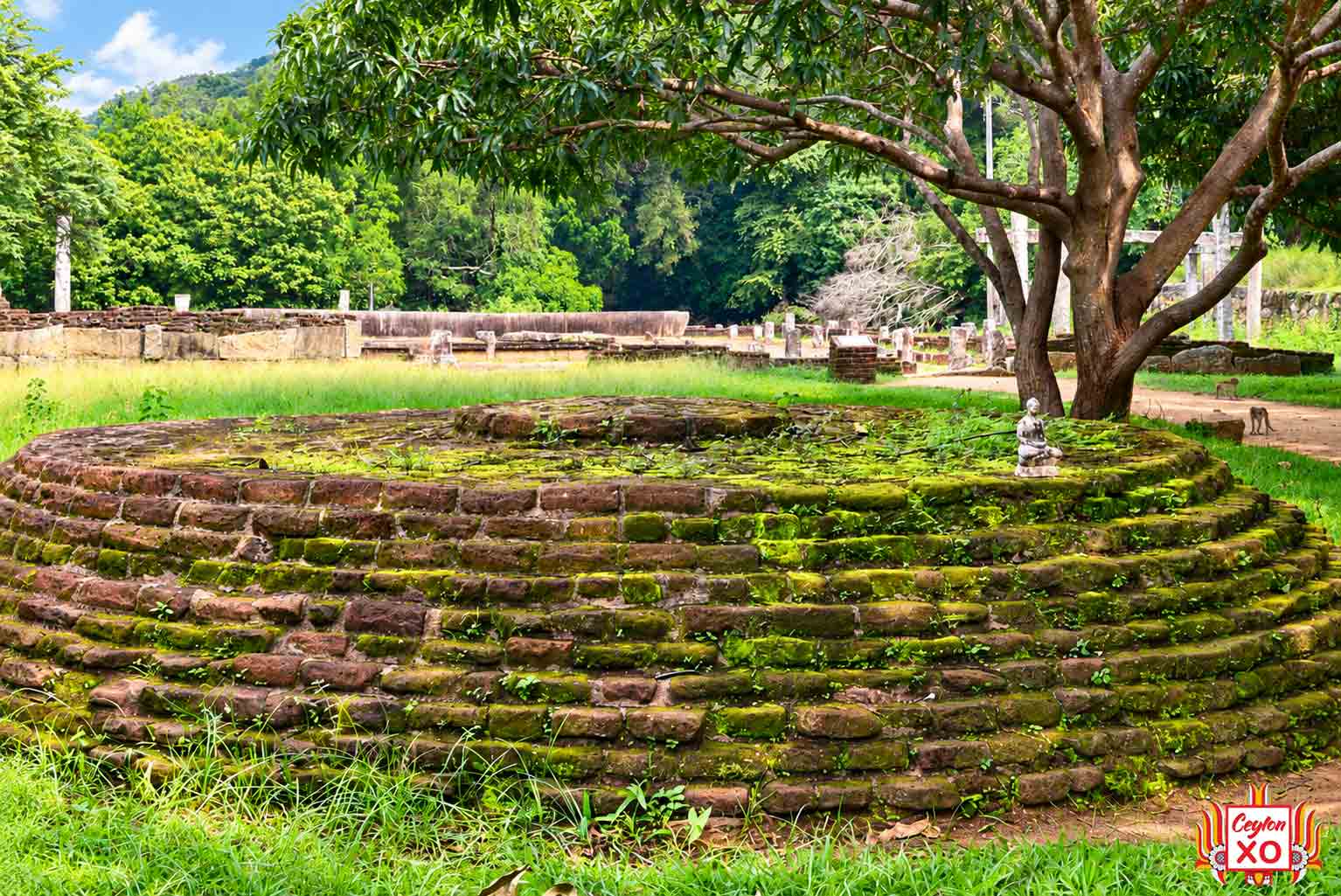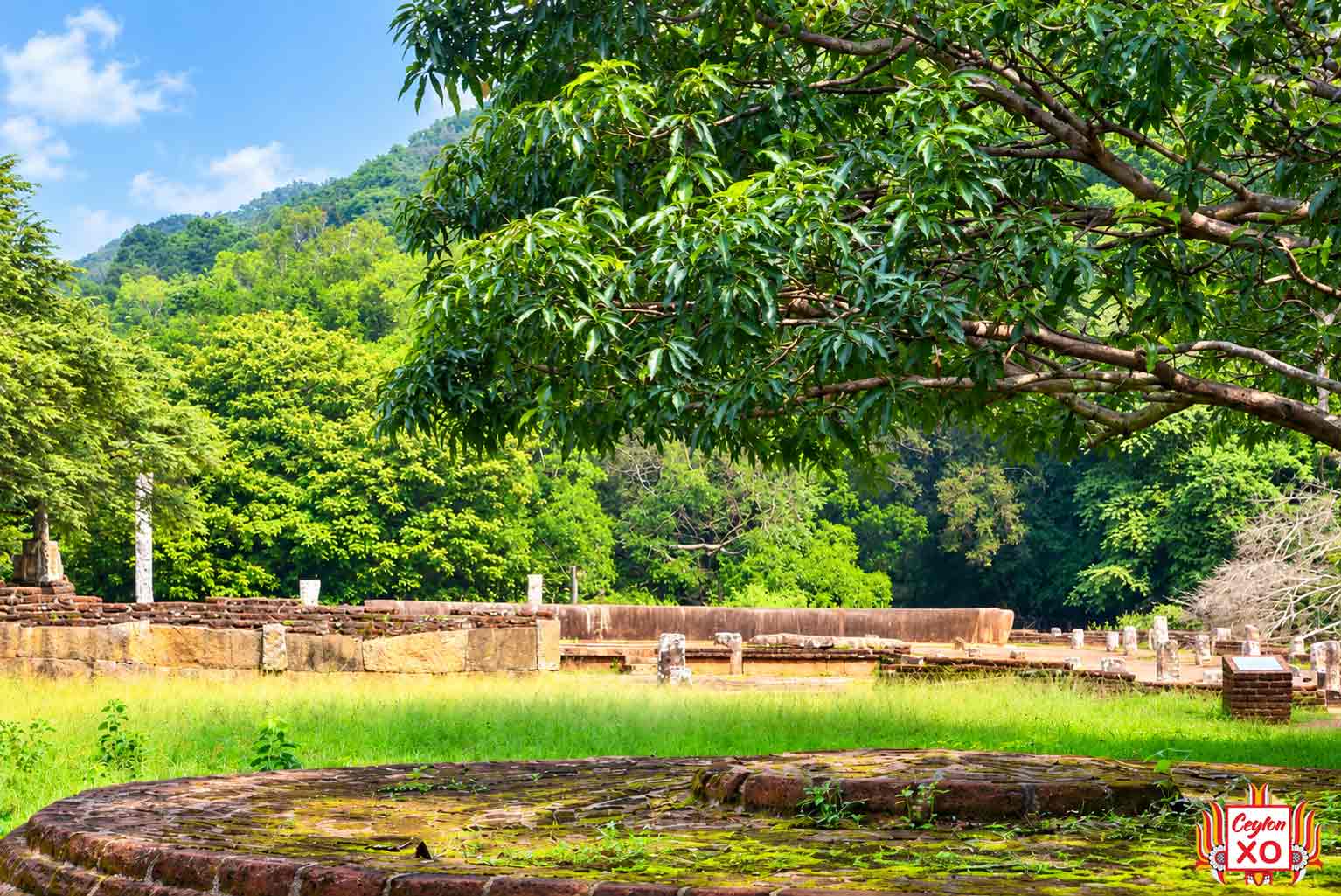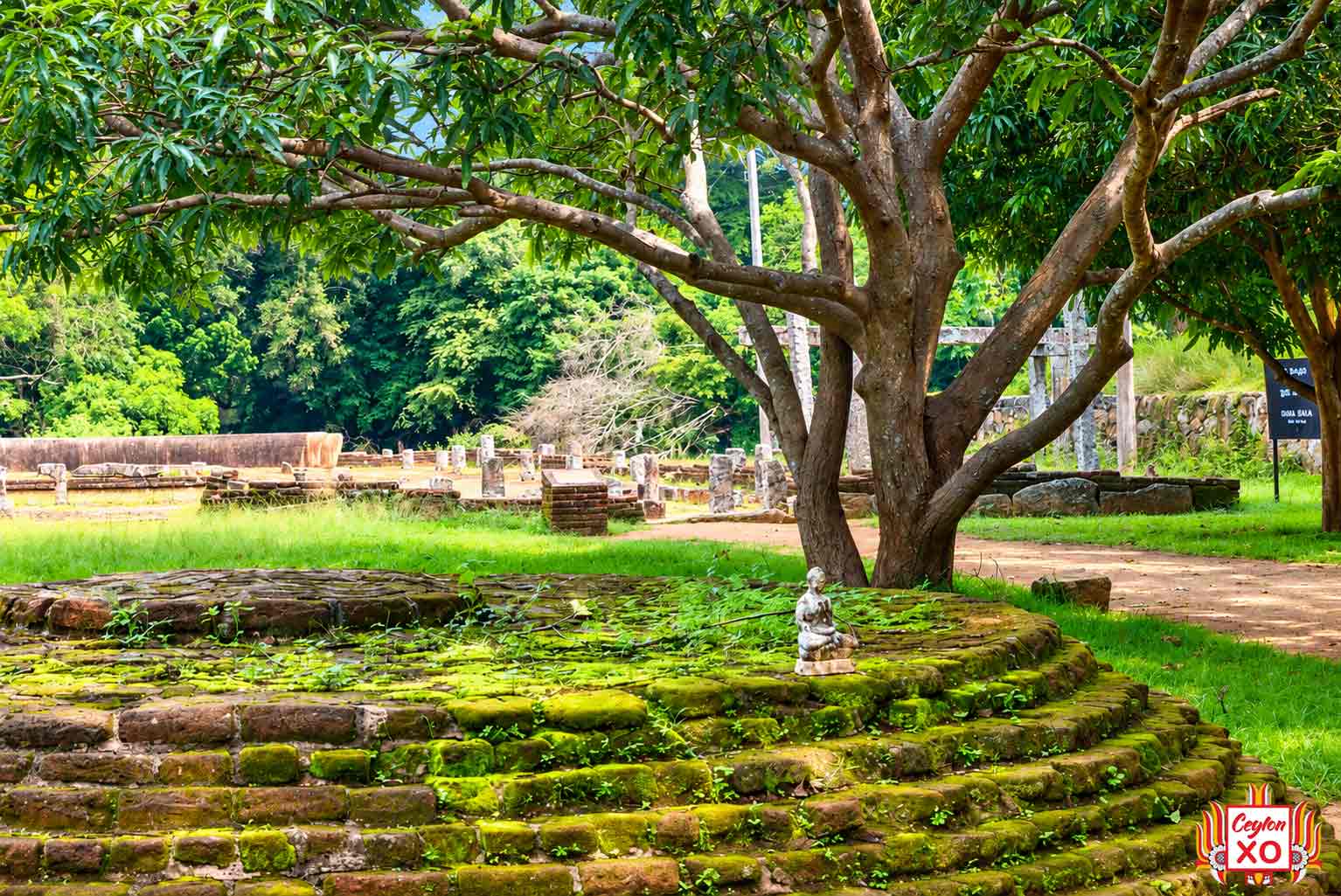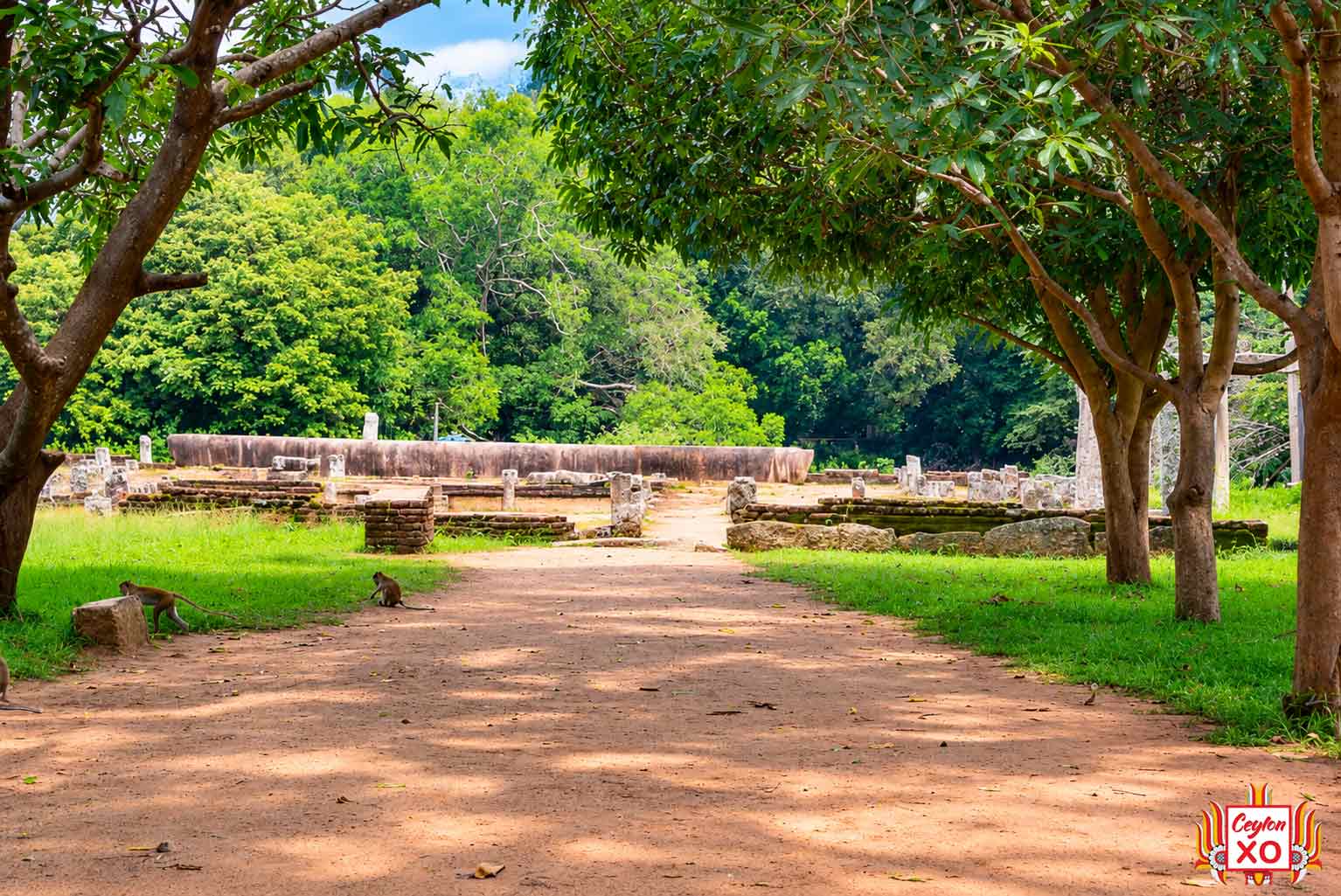
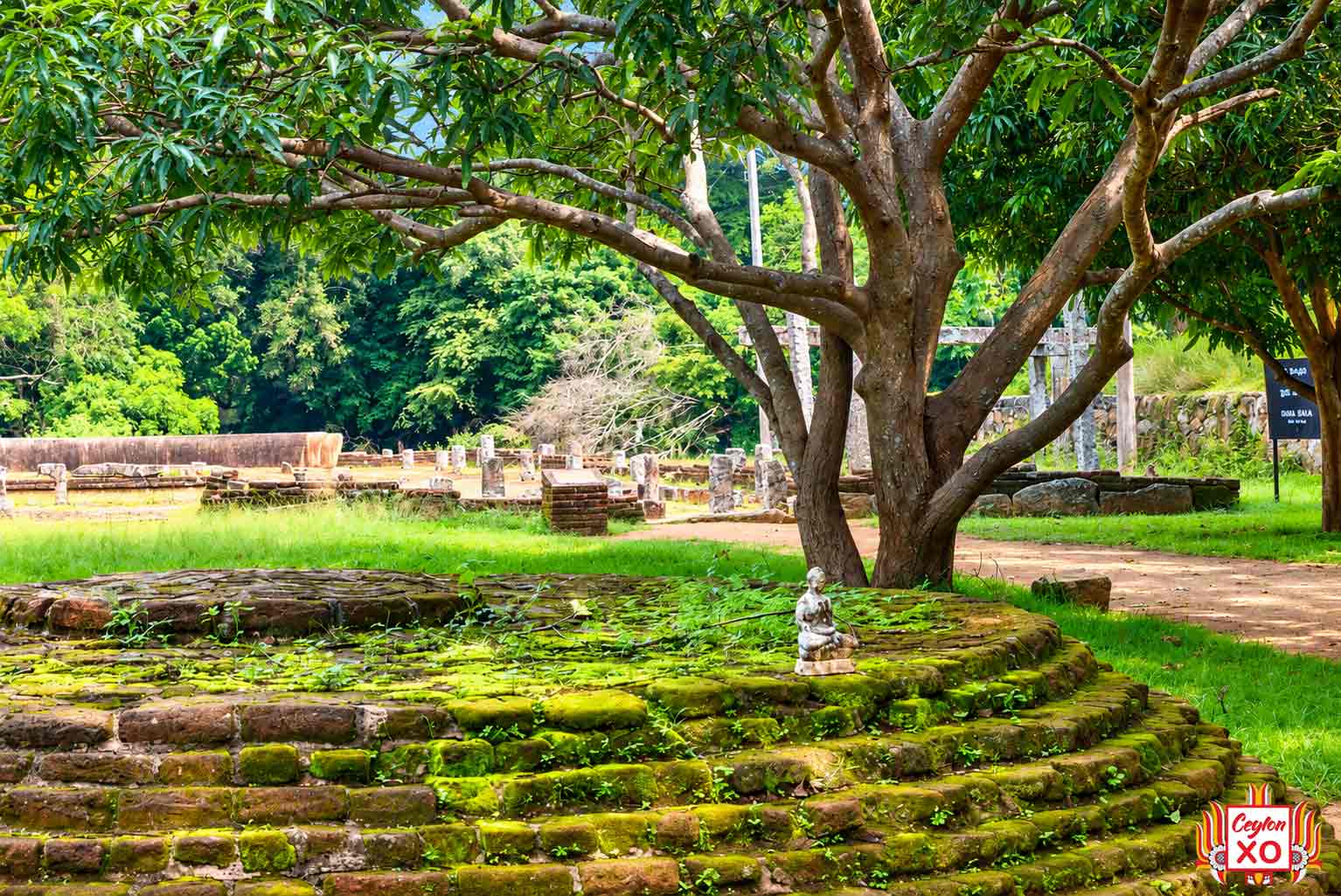
The Alms Hall, also known as the Dana Shalawa, was used for the preparation and distribution of alms to the resident monks. In ancient Buddhist monasteries, providing food for monks was an important daily practice supported by the generosity of devotees and the royal establishment. The hall played a vital role in organising this process, allowing monks to receive their meals in an orderly manner while maintaining the discipline and communal traditions of monastic life.
The hall measures approximately 34.9 metres in length and 23.5 metres in width. One of its most distinctive features is the presence of two enormous stone troughs, traditionally known as the Bath Oruwa and the Kanda Oruwa. The larger trough was used to hold cooked rice, while the other was used for curries and other food preparations. These troughs were carved from stone and arranged to facilitate the distribution of meals to the monks. The facility is believed to have served a large monastic community, potentially numbering more than a thousand monks.
The Alms Hall also demonstrates the advanced engineering and organisational skills of ancient Sri Lankan society. Archaeological remains indicate that the building had stone pillars supporting its roof, a central courtyard, water facilities, and drainage arrangements. These features helped maintain cleanliness and supported the preparation and distribution of food. The carefully planned design reflects the importance of discipline, communal living, and the generous offering of food within Buddhist monastic traditions.