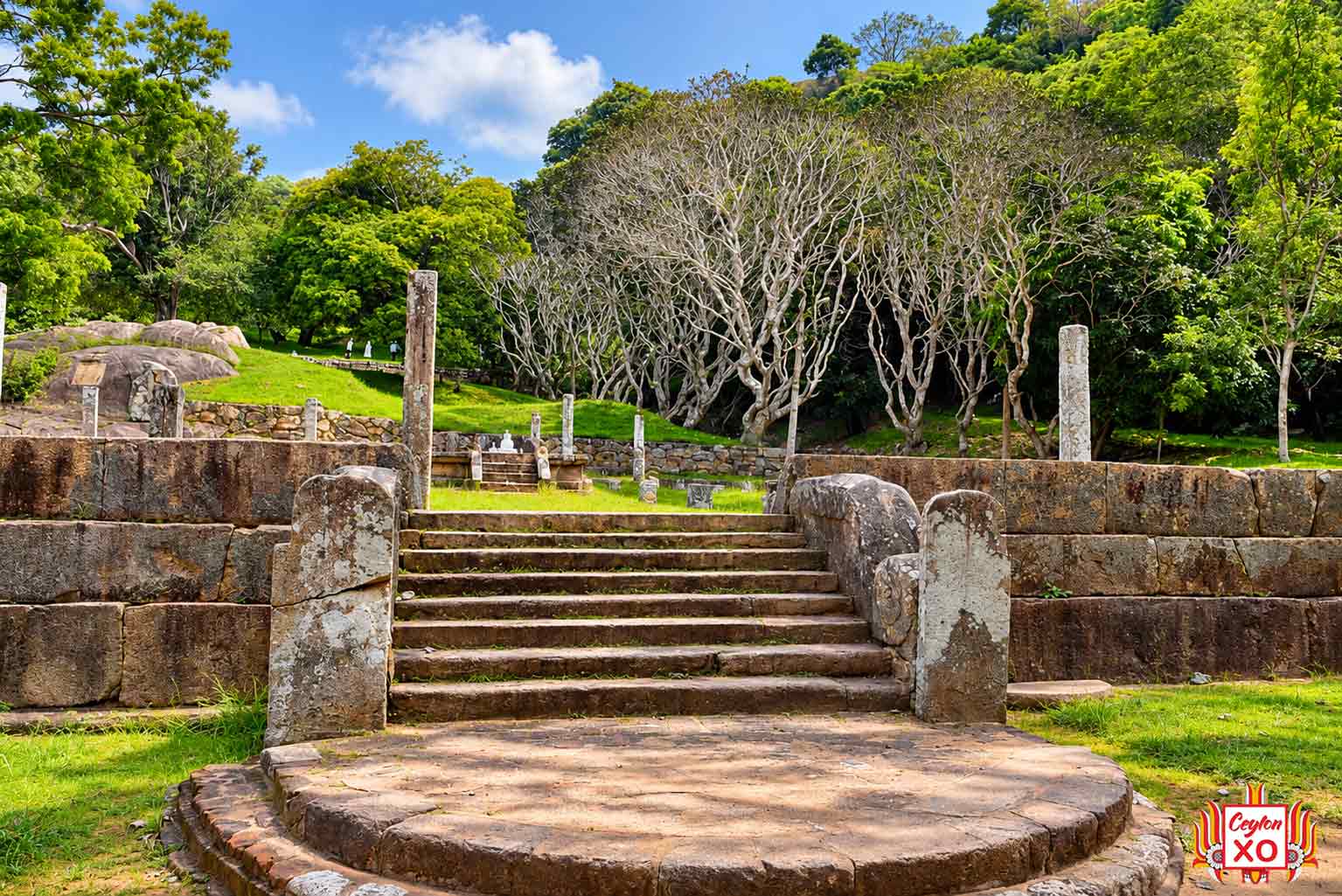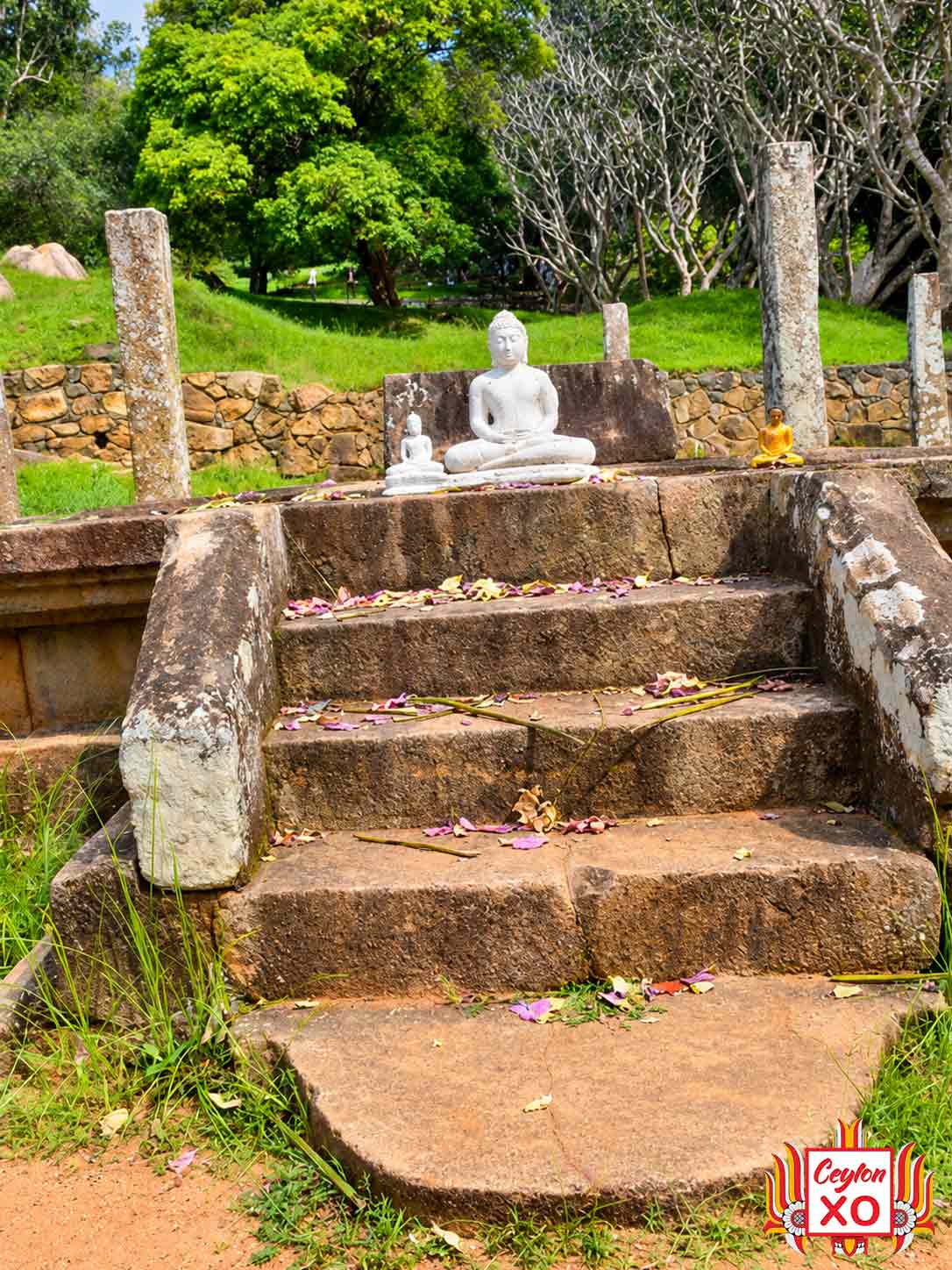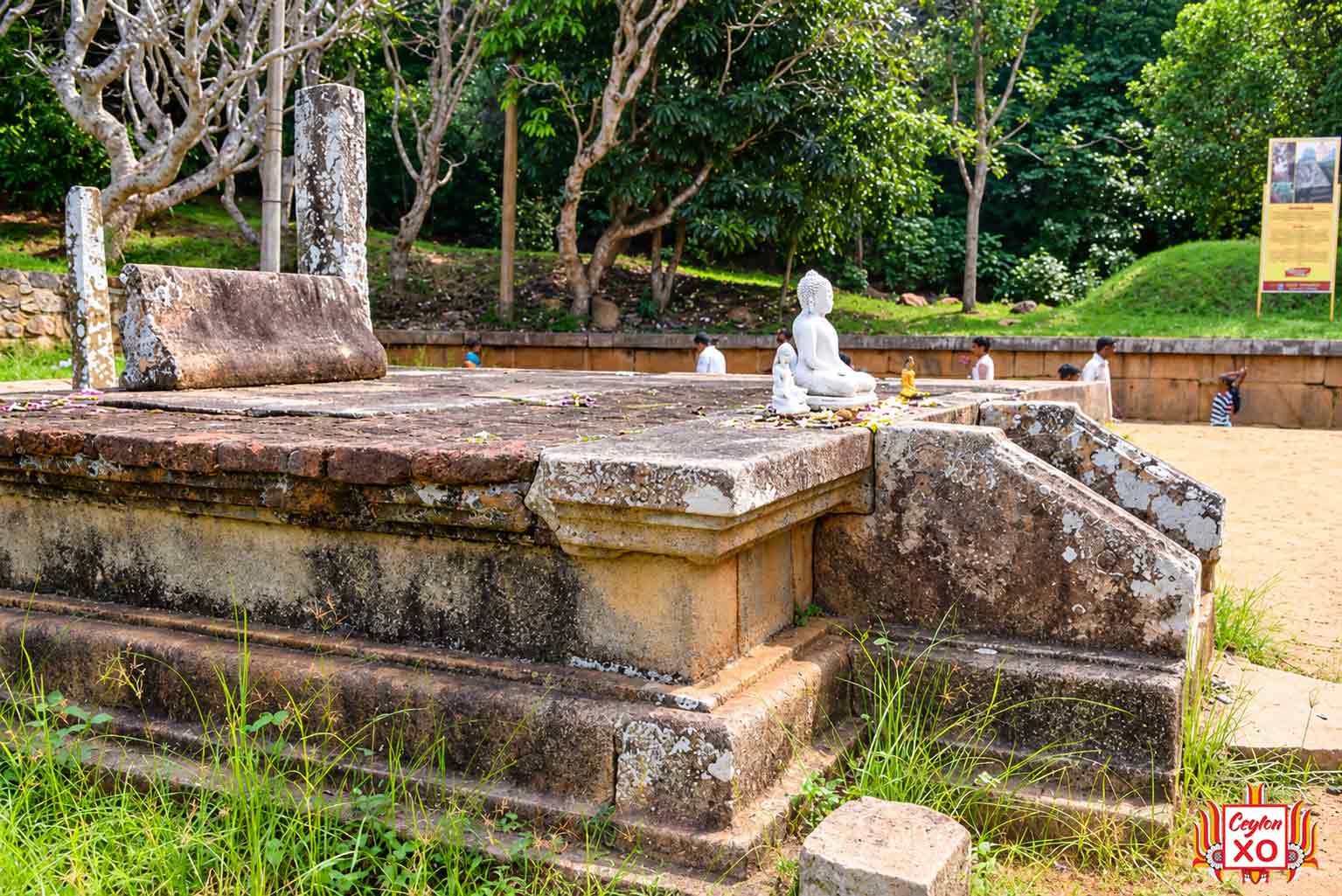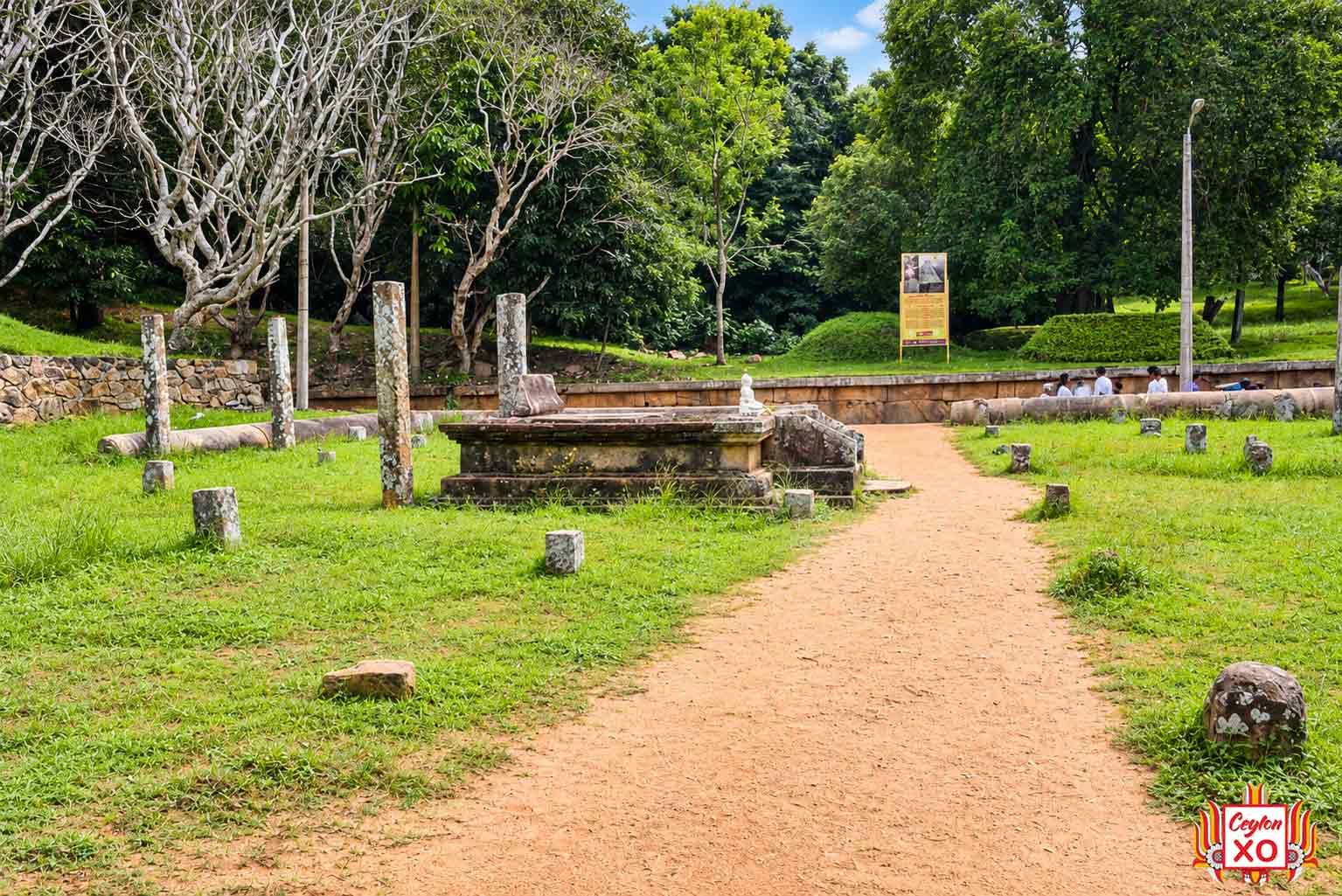
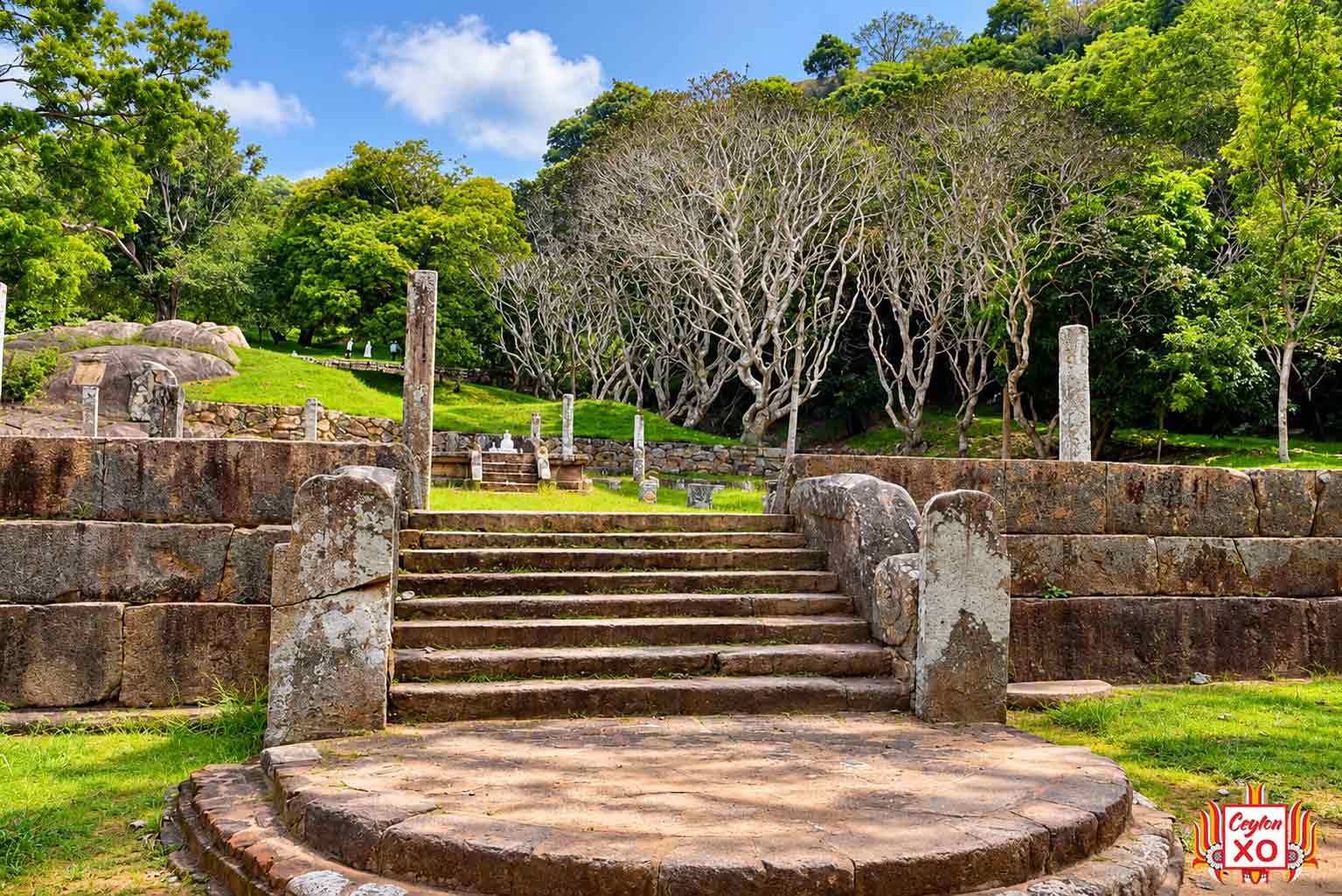
These halls were crucial for communal activities and decision-making within the monks. One such building, identified through its architectural features described in these sources, served as an assembly hall where monks convened to deliberate and reach consensus on various issues.
This hall was not only a venue for administrative meetings but also doubled as a preaching hall, where religious teachings and sermons were delivered to the monastic community and lay followers alike.
The identification of this building as an assembly and preaching hall underscores its dual role in fostering community cohesion and disseminating Buddhist teachings. Its architectural and functional significance offers valuable insights into the social and religious dynamics of ancient Sri Lanka, demonstrating the importance of communal spaces in sustaining and propagating Buddhist practices and governance within monastic communities.