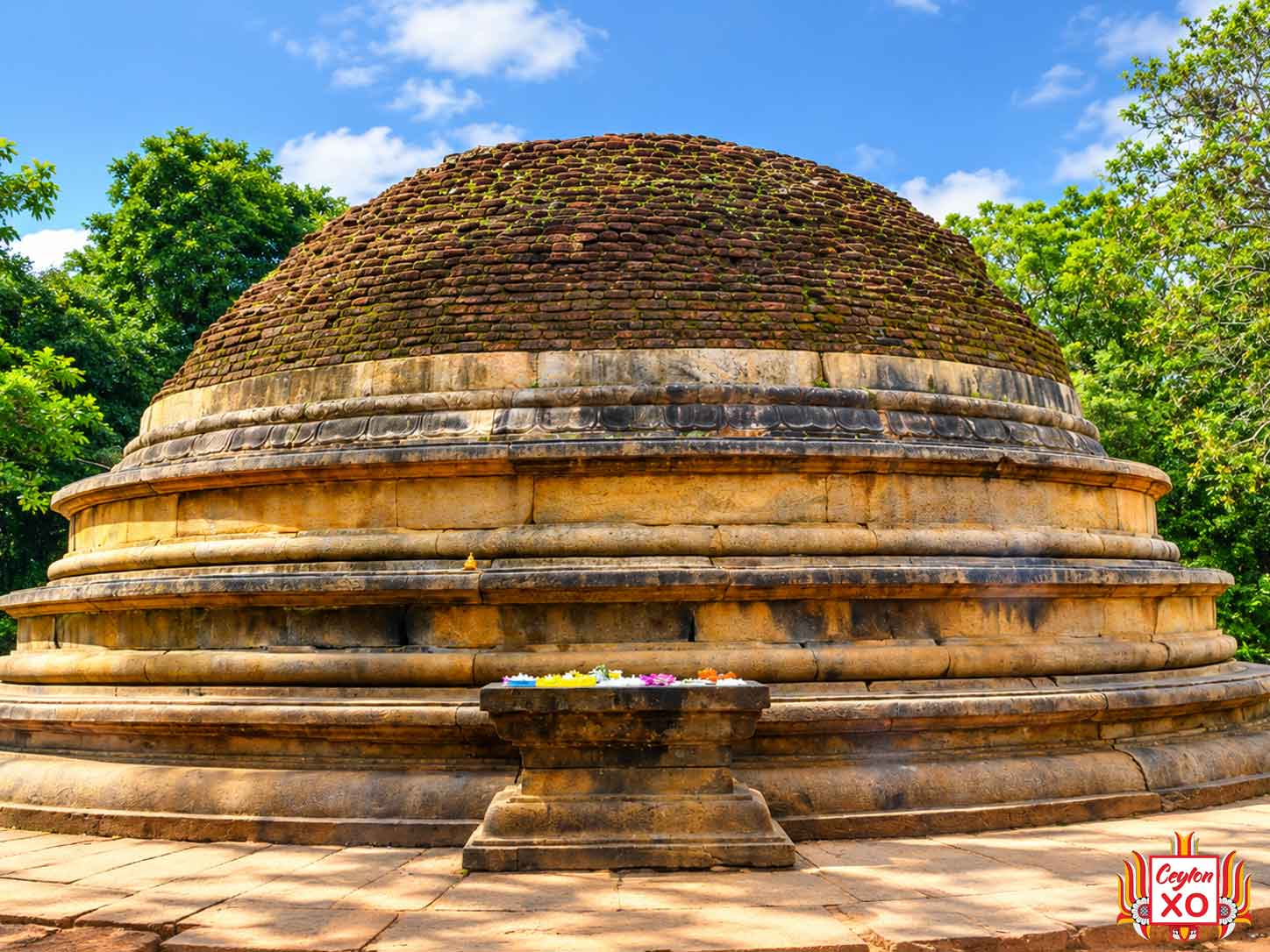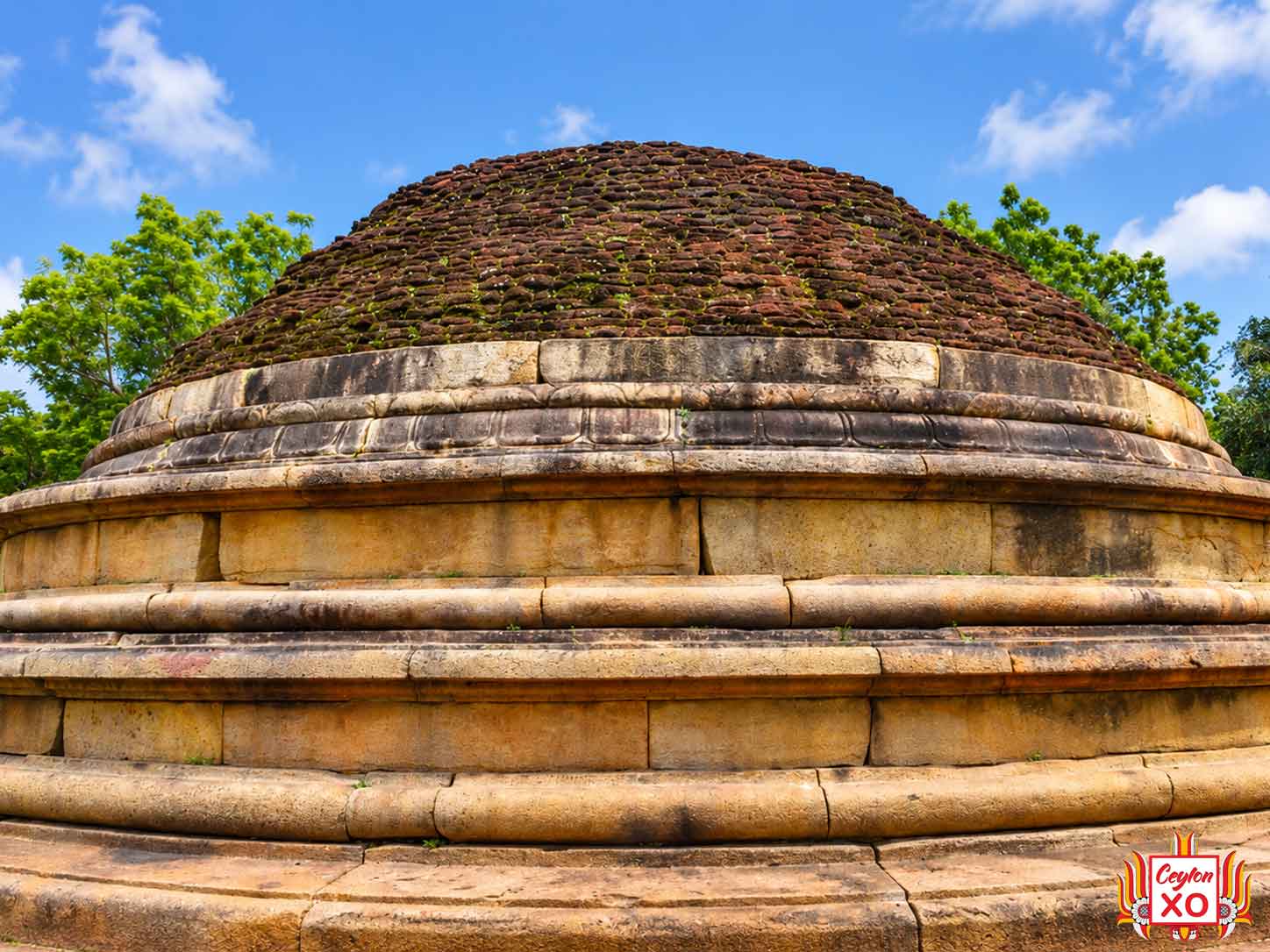
The stupa known as "Katu Seya" is believed to have been built to enshrine the tools and equipment used in the construction of the Mihintale Monastic Complex.
This stupa is mentioned in a slab inscription from the reign of King Mihindu IV, which stipulates that lands offered to this stupa must be managed by officials responsible for Eth Vehera. The exact time of construction of Katu Seya is uncertain, but it is presumed to have been built after the establishment of the ancient temple complex at Mihintale.
The lower part of Katu Seya is constructed from granite and is relatively small in size, while the upper part is made of bricks. In 1941, it was declared a protected monument by the Archaeological Department due to its historical significance.
Excavations conducted in the early 19th century around Katu Seya unearthed copper plates inscribed with verses from Mahayana Sutras in both Sanskrit and Sinhala. These plates date back to the 8th and 9th centuries, providing evidence that the site had connections to Mahayana Buddhism during the Anuradhapura period.