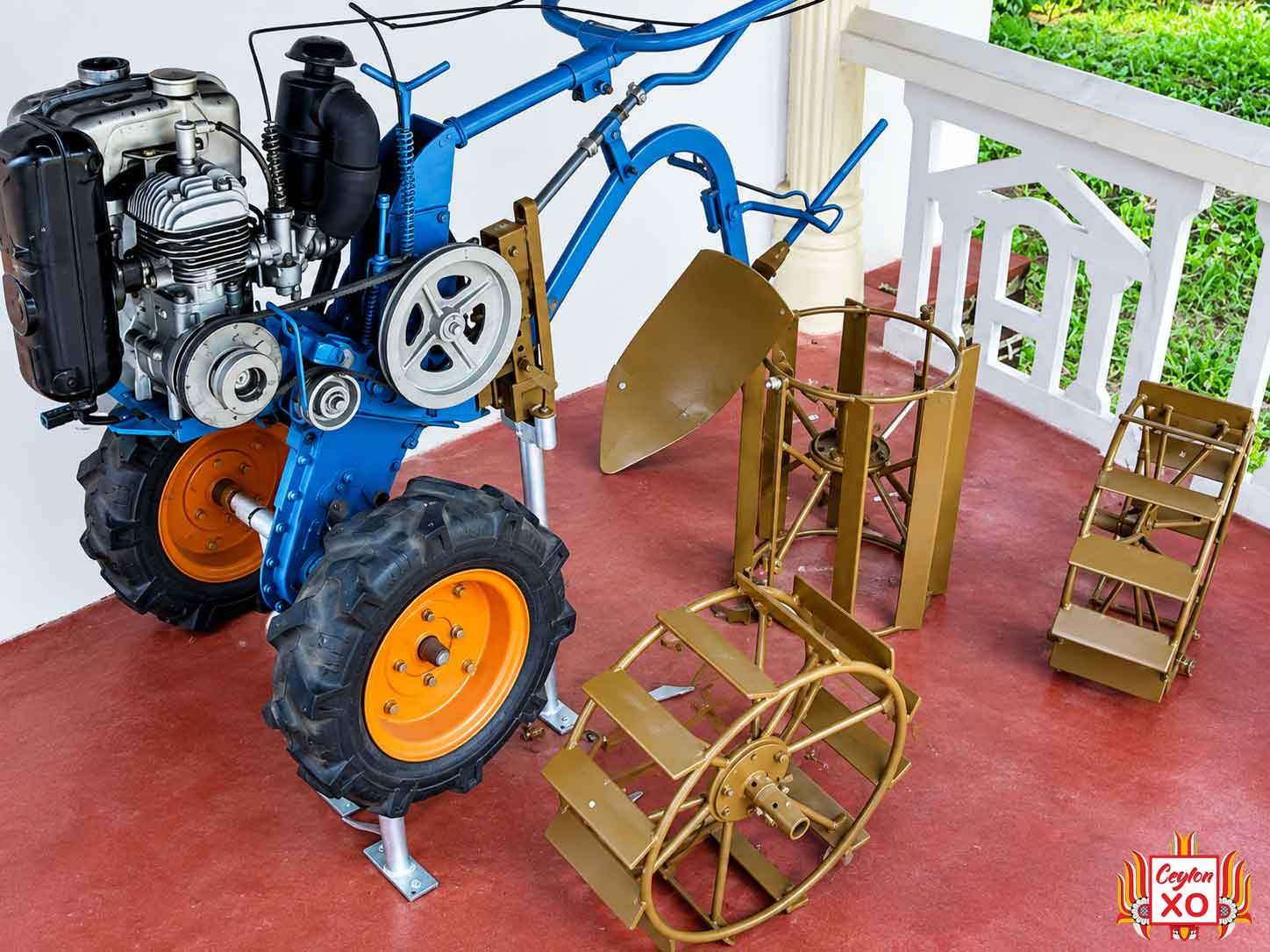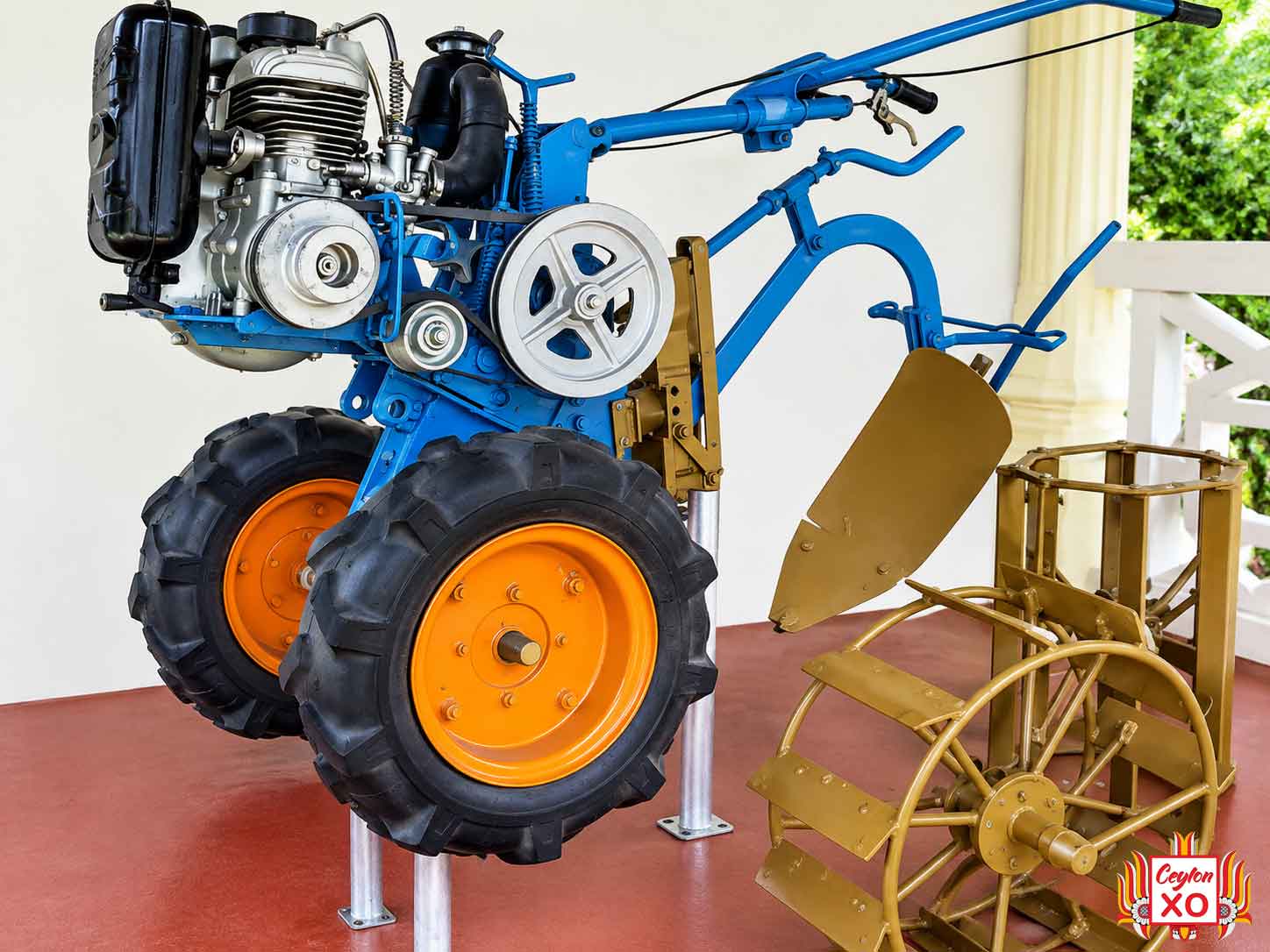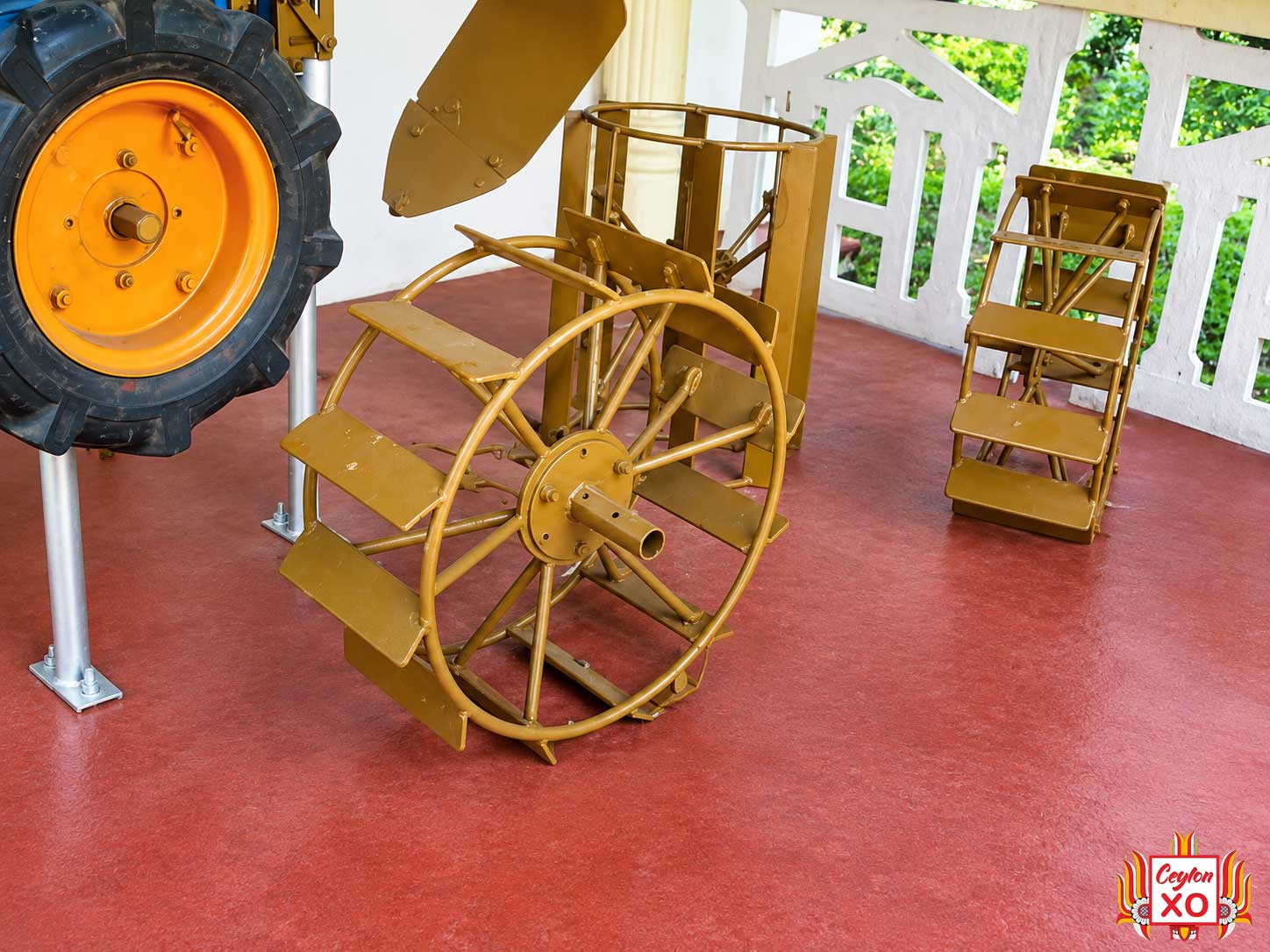
Designed by Dr. Ray Wijewardene, a renowned Sri Lankan engineer, inventor, and agricultural pioneer. His invention, known as the Landmaster, was developed in the 1950s to help farmers work more efficiently. At that time, many Sri Lankan farmers relied on buffaloes and traditional tools to plough their paddy fields.
Large tractors were often expensive and unsuitable for small farms, so a compact, practical machine offered a useful alternative. The Landmaster was designed to perform a range of agricultural tasks, including preparing soil, cultivating land, and powering farming equipment. Its compact size made it suitable for smaller fields, while its versatility helped reduce physical labour and save time.
The design attracted international interest, and the Landmaster was subsequently manufactured in the United Kingdom. Dr. Wijewardene’s work became an important part of the history of agricultural mechanisation in Sri Lanka and beyond. Dr. Wijewardene’s invention gained international recognition, and more than 300,000 units were reportedly sold across 27 countries. His work demonstrated that a simple, locally inspired design could make a major difference to farming communities around the world.
Dr. Ray Wijewardene passed away on 18 August 2010, but his contributions to engineering, agriculture, and sustainable development remain an important part of Sri Lanka’s history. His invention of the two-wheel tractor stands as an inspiring example of Sri Lankan creativity and innovation, showing how one person’s idea can improve the lives of farmers and influence agricultural practices around the world.
The world’s first two-wheel tractor, invented by renowned Sri Lankan engineer and agricultural pioneer Dr. Ray Wijewardene, was preserved as a valuable historical artefact in his honour. On 7 March 2007, the tractor was placed in an exhibition pavilion at the Opitiya Model Coconut Seed Garden, located on the grounds associated with the house where he was born. At the time, the property belonged to the Coconut Cultivation Board. This site commemorates Dr. Wijewardene’s contribution to agricultural engineering and represents an important part of Sri Lanka’s history of innovation.