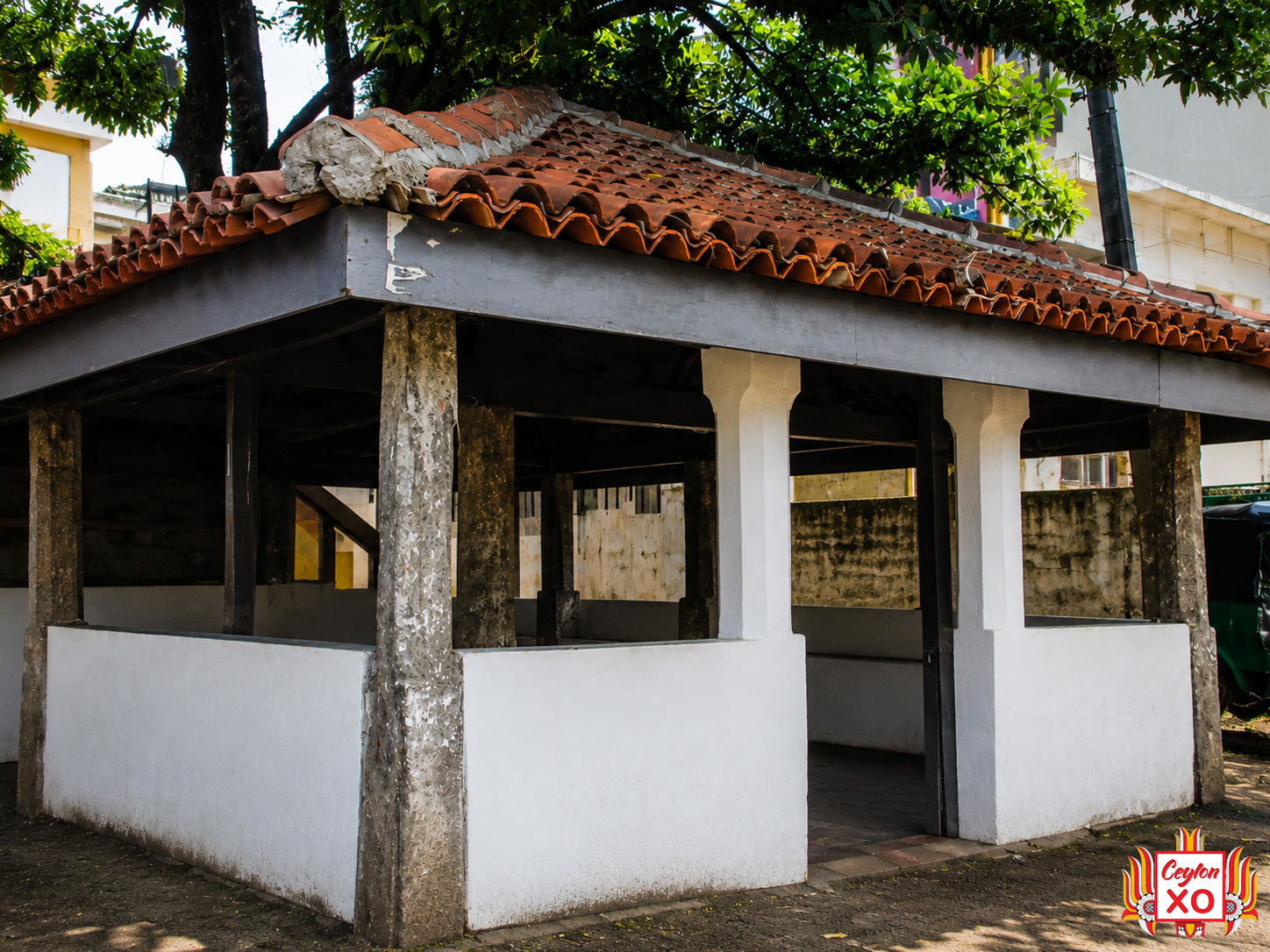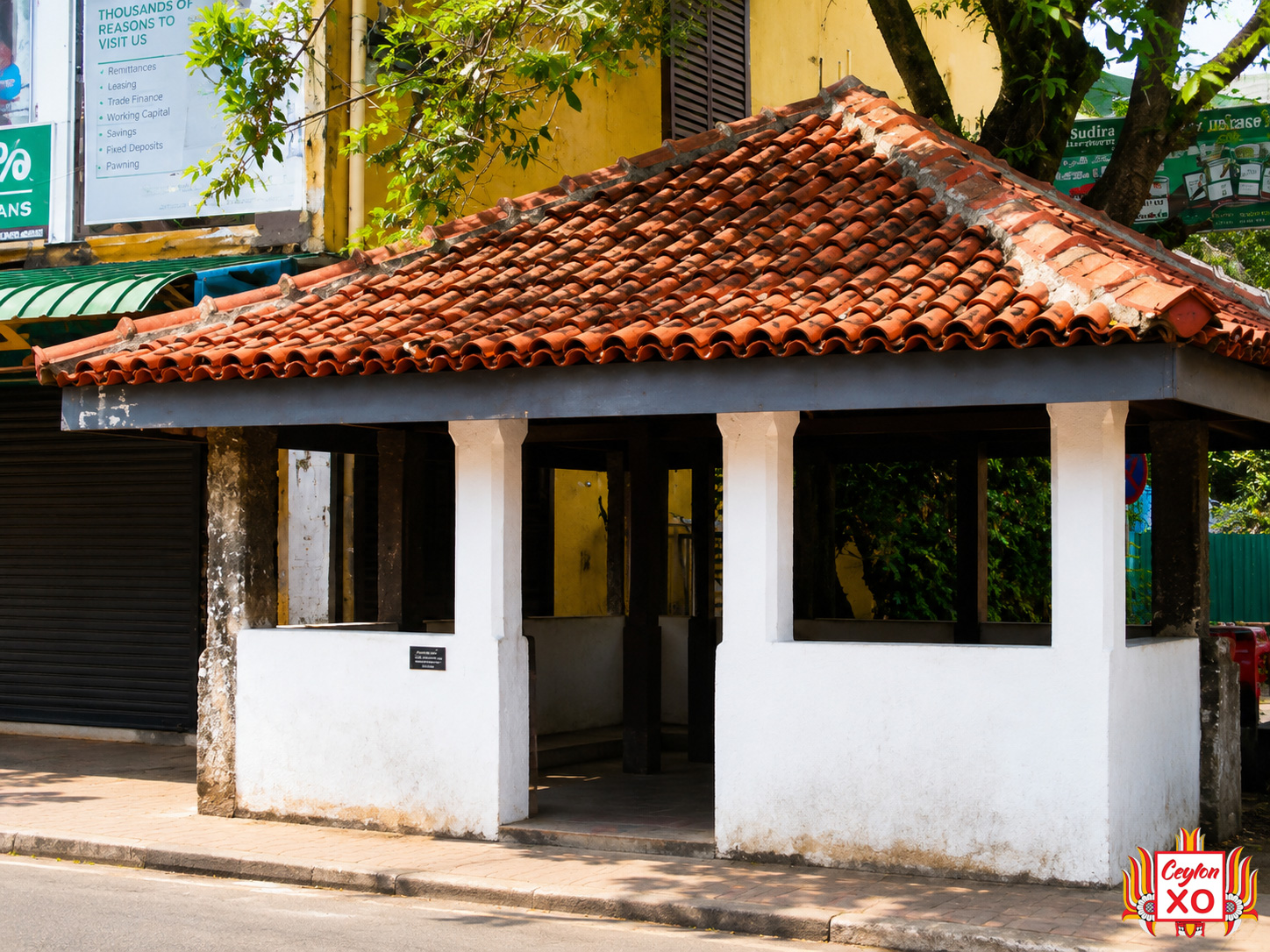
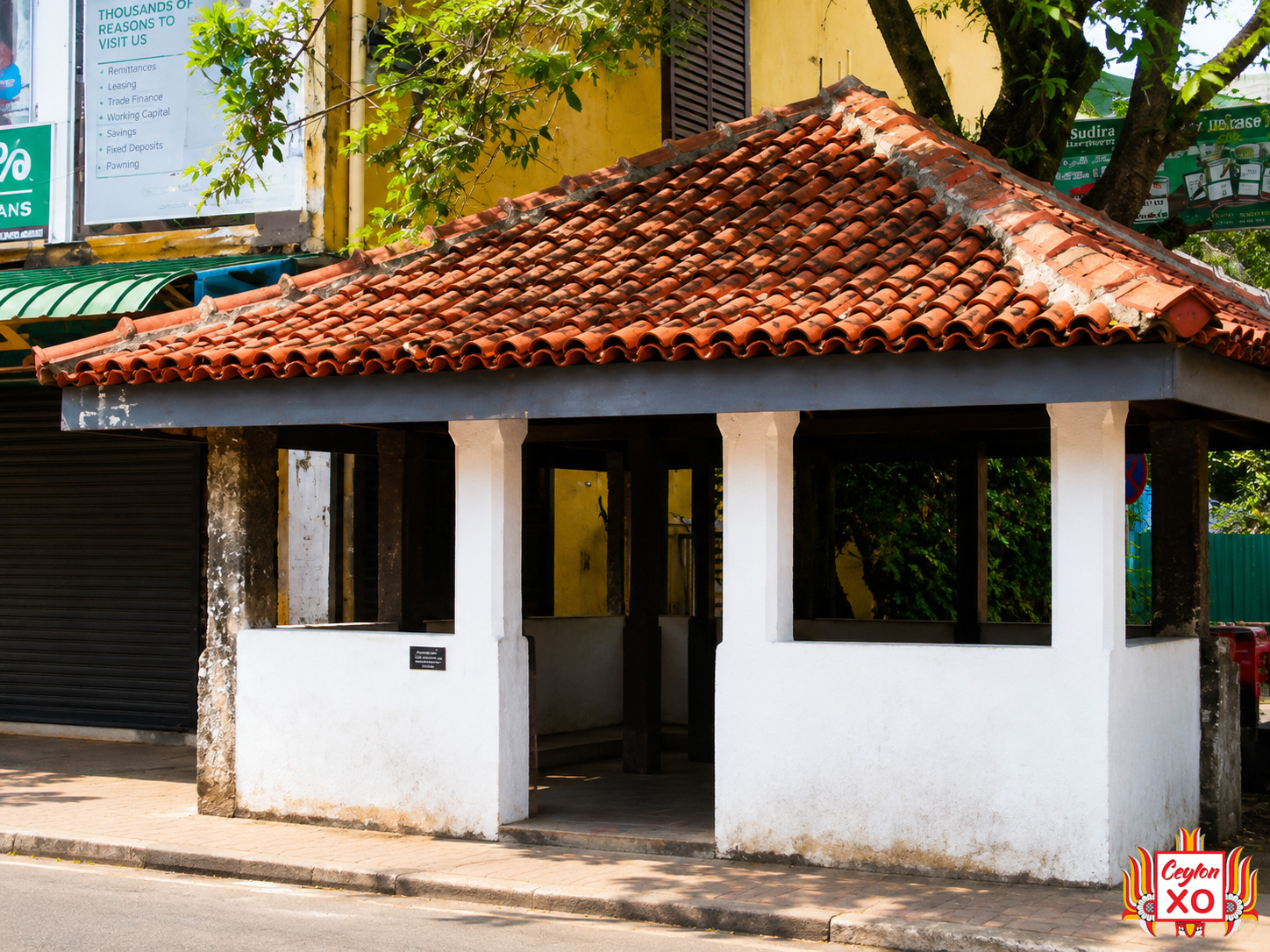
The history of Kotte Ambalama dates back to the Kotte Period, when Sri Jayawardenepura Kotte flourished as the capital of the kingdom during the 15th and 16th centuries. During this era, the ambalama (Resting place) was built to provide shelter and rest for travellers, pilgrims, merchants, and royal messengers who journeyed through the kingdom. Before the development of modern transportation, these roadside pavilions played a vital role by offering a safe place where people could rest, seek protection from the sun and rain, and continue their journeys refreshed.
The ambalama is an excellent example of traditional Sri Lankan architecture. The stone structure measures approximately 20 feet in length and 15 feet in width, and its elegant clay-tiled roof is supported by ten sturdy granite pillars. The open-sided design allows natural light and fresh air to circulate freely, creating a cool and comfortable resting place. Built using durable stone and traditional construction techniques, the ambalama has survived for centuries and remains a valuable example of the craftsmanship of the Kotte Period.
In recent years, the Road Development Authority carried out a road widening project in the area. To preserve this valuable historical monument, the entire structure was carefully dismantled and relocated a short distance inward from its original site. This conservation effort ensured that the ambalama could be protected while allowing modern infrastructure development to proceed.
--------------------
⚠️ Kotte Ambalama is an open public monument that may occasionally be occupied by members of the public seeking shelter. Visitors are advised to avoid entering the structure alone, especially during quiet hours. Please remain aware of your surroundings, safeguard your personal belongings, and exercise caution while exploring the site.