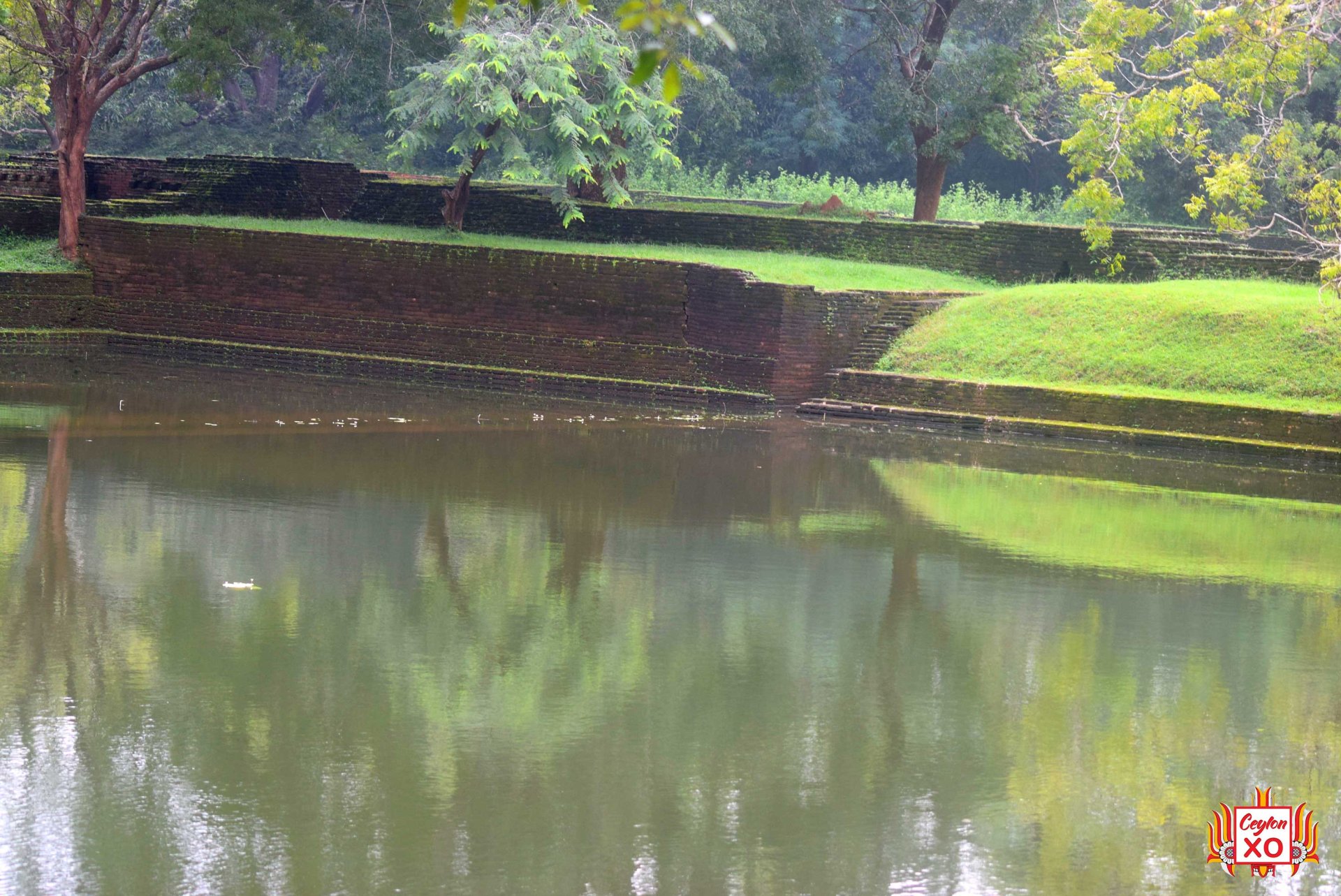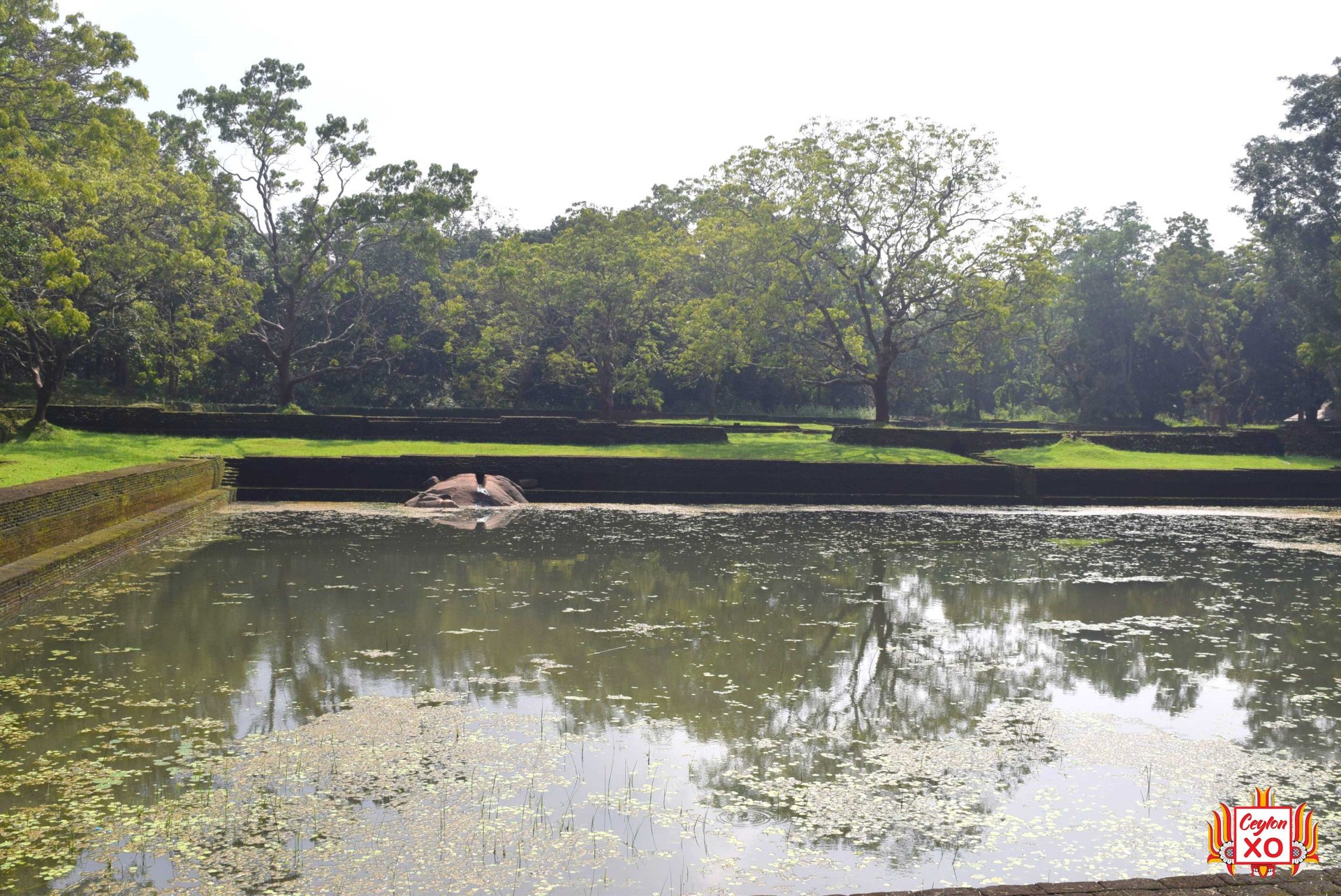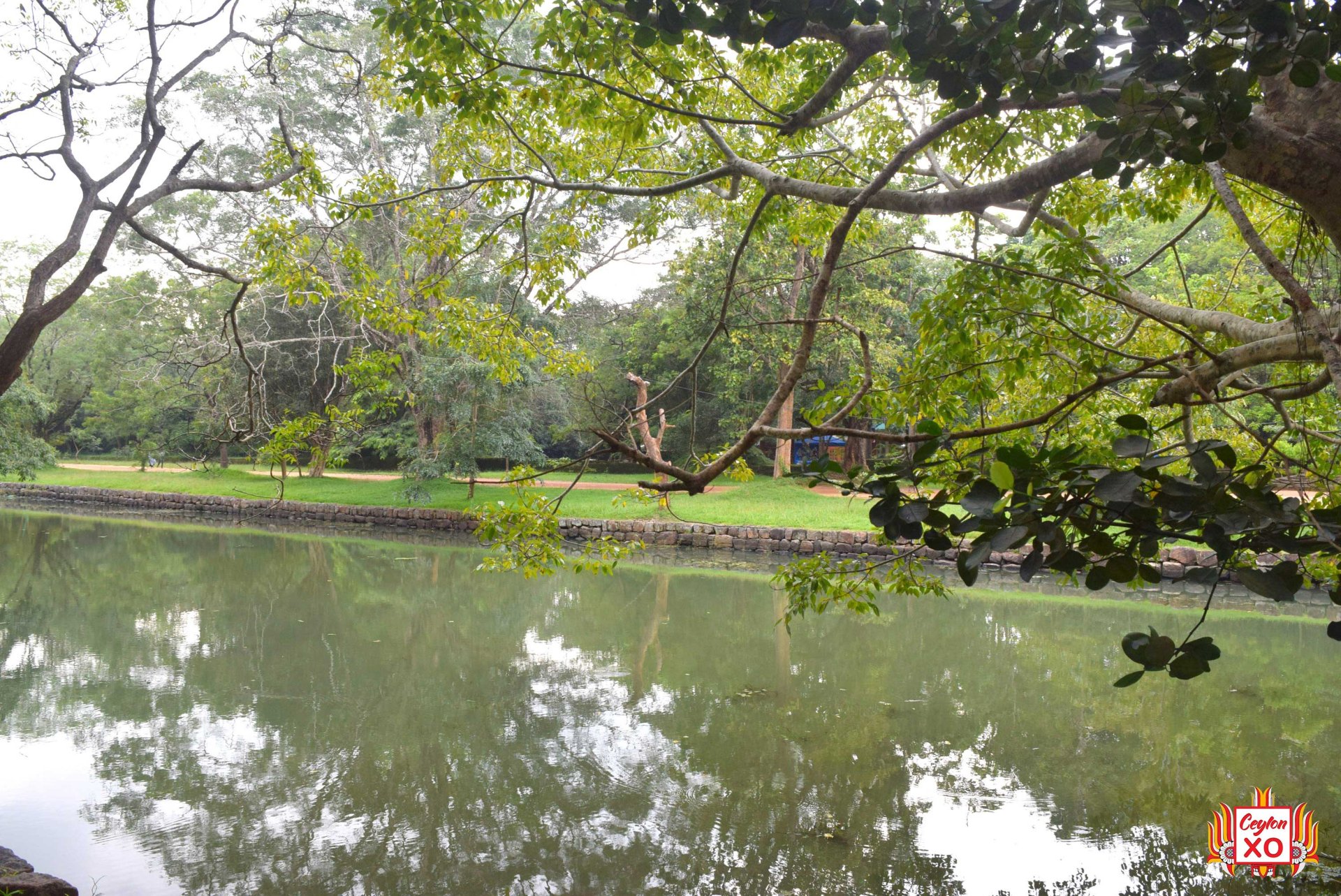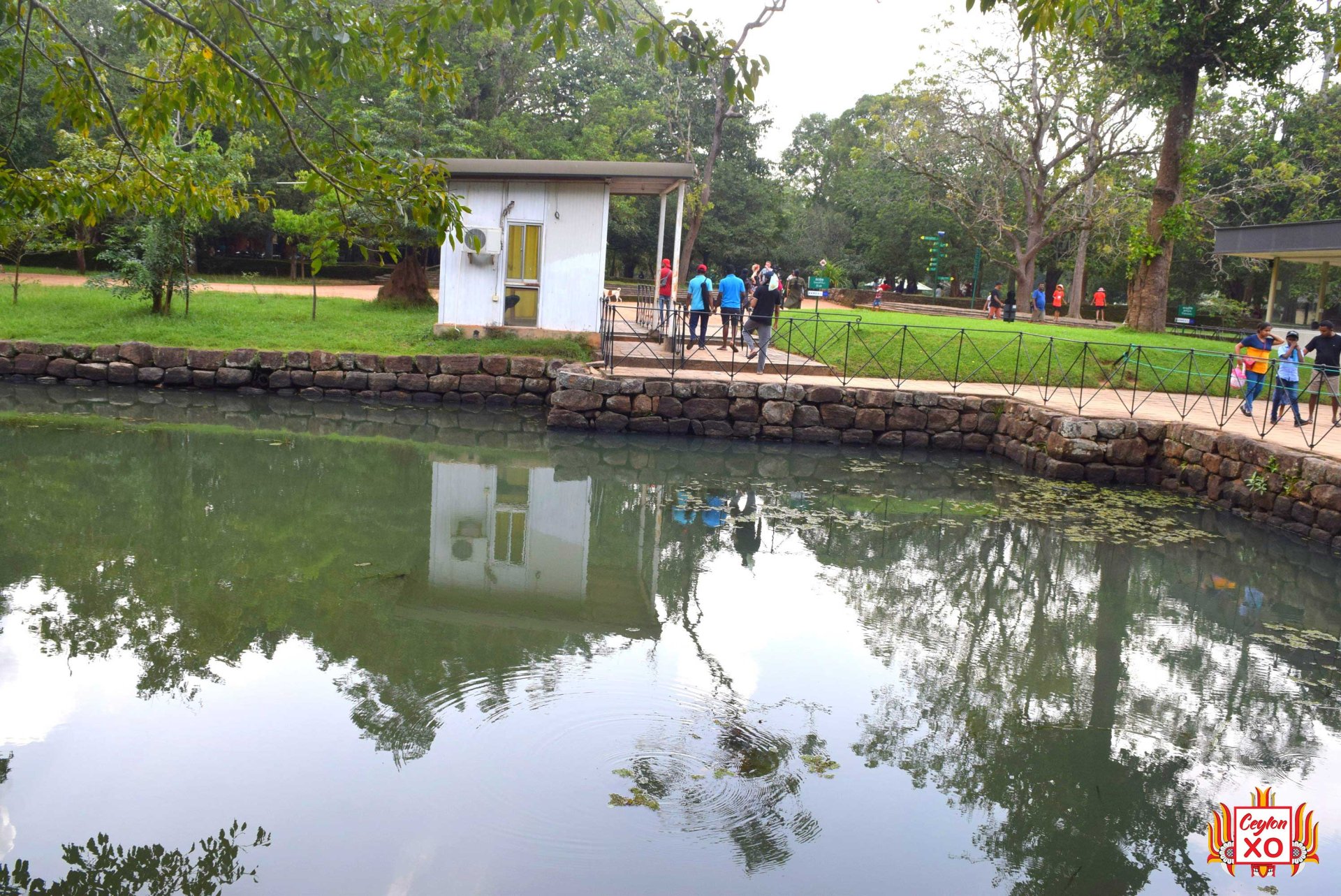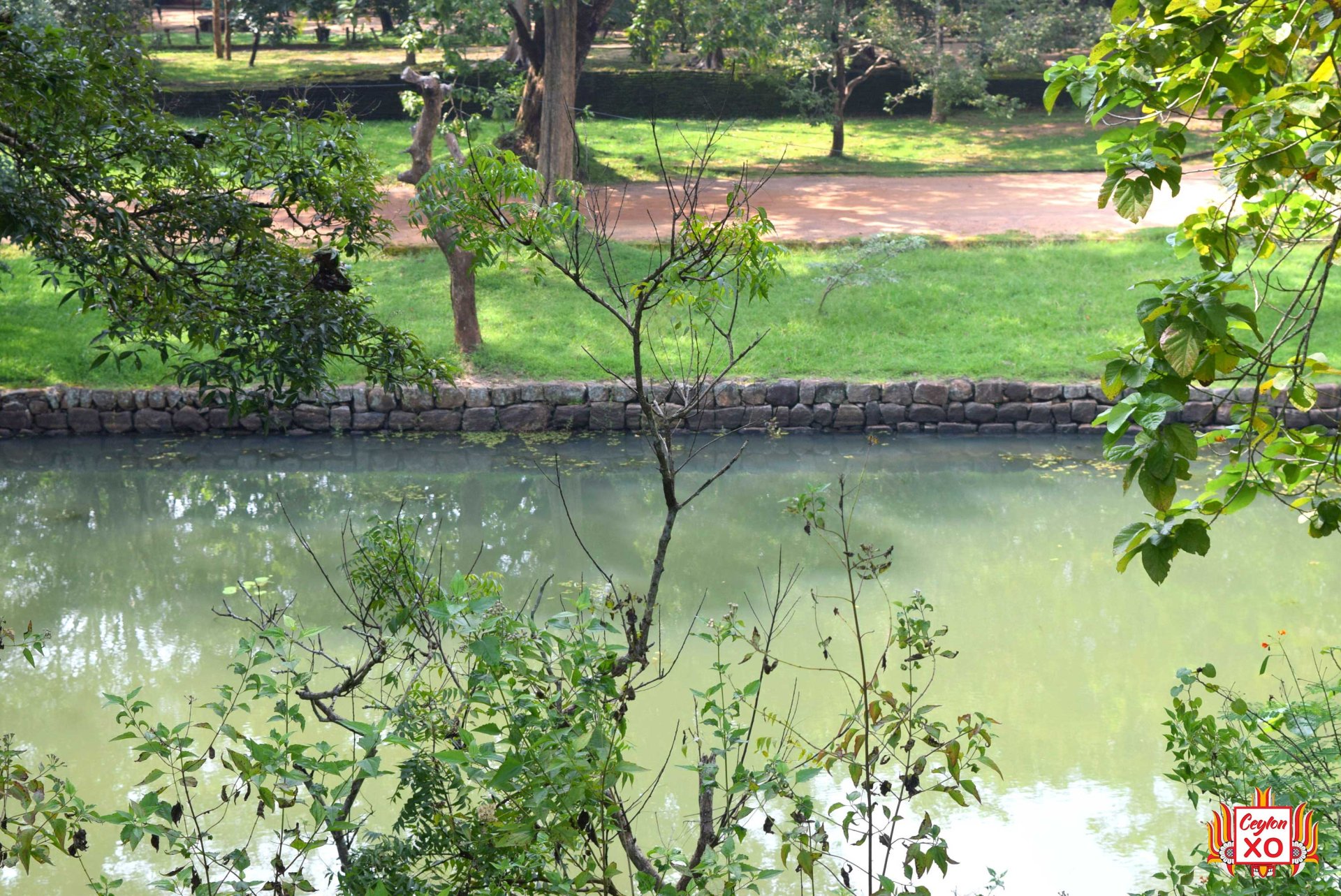
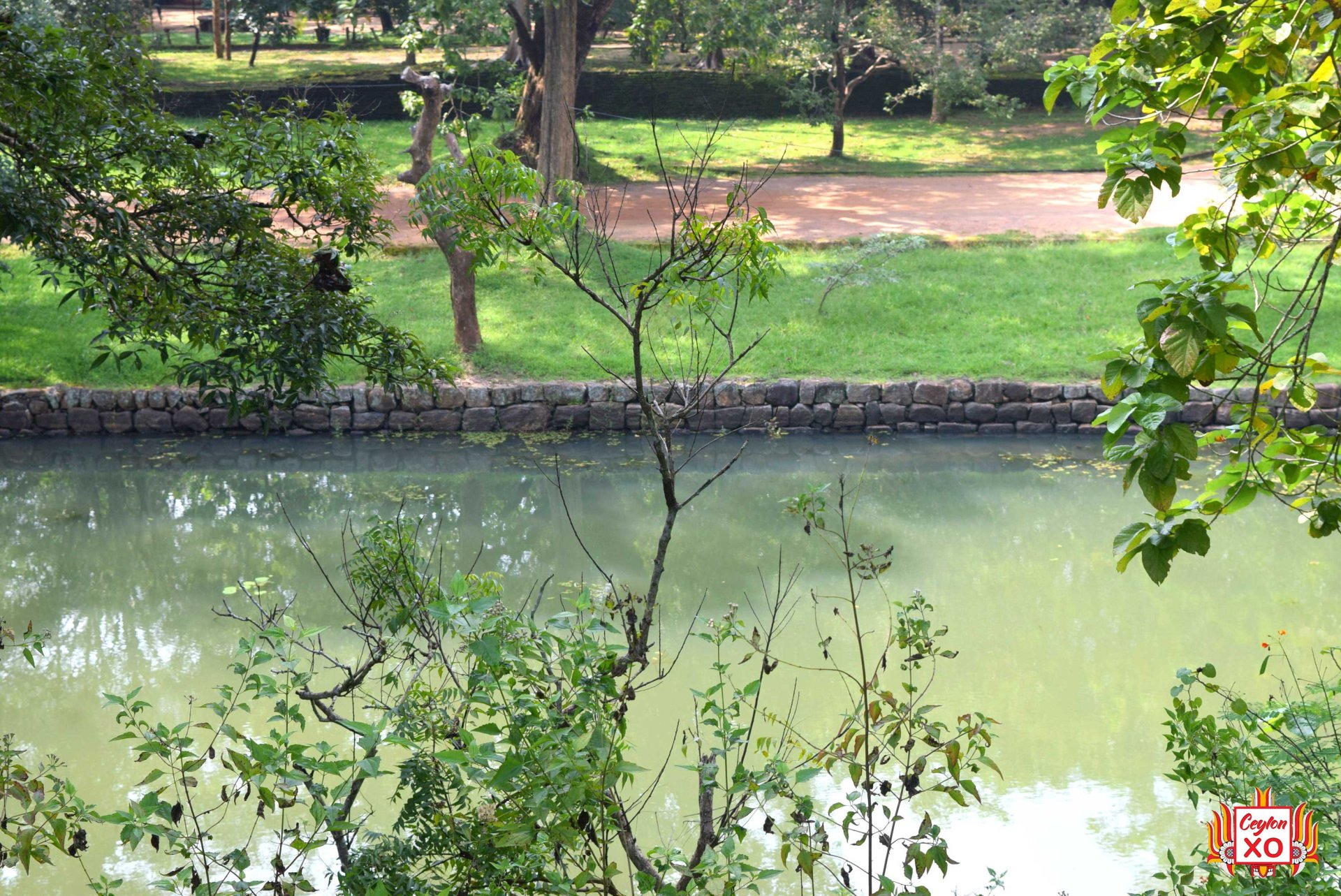
The Outer Moat is the larger of the two moats and forms the first line of defence around the fortress. It was designed to prevent enemies from approaching the rock easily. The wide water barrier made it difficult for invading armies to cross, especially when combined with surrounding earth ramparts and defensive walls. Some historians also believe that the moat may have been home to crocodiles or other obstacles to discourage intruders. Besides its military role, the outer moat enhanced the beauty of the royal city by reflecting the towering Sigiriya Rock in its calm waters.
Inside the outer moat lies the Inner Moat, which provides an additional layer of protection. This moat surrounded the royal gardens and the main entrance leading toward the rock fortress. Anyone attempting to reach the palace had to cross both moats, making unauthorised access extremely difficult. The inner moat was carefully integrated into the overall landscape, blending security with artistic design. Its clear water, surrounding greenery, and nearby fountains created a peaceful environment for the royal family and visitors.
The two moats also played an important role in water management. They were connected to Sigiriya's sophisticated hydraulic system, which collected and distributed rainwater throughout the gardens. The water levels of the moats were carefully controlled using underground channels and reservoirs. During the rainy season, excess water was stored and directed through this network, ensuring a continuous water supply for the fountains, pools, and gardens even during dry periods. This remarkable engineering system continues to function in parts of Sigiriya today.
The moats are closely connected with the famous water gardens of Sigiriya. The reflections of the rock fortress on the water, together with the symmetrical layout of the gardens, created a visually stunning entrance to the palace. Visitors approaching the fortress would have crossed bridges over the moats before entering the magnificent royal gardens. This carefully planned approach highlighted the wealth, power, and sophistication of King Kashyapa's kingdom.