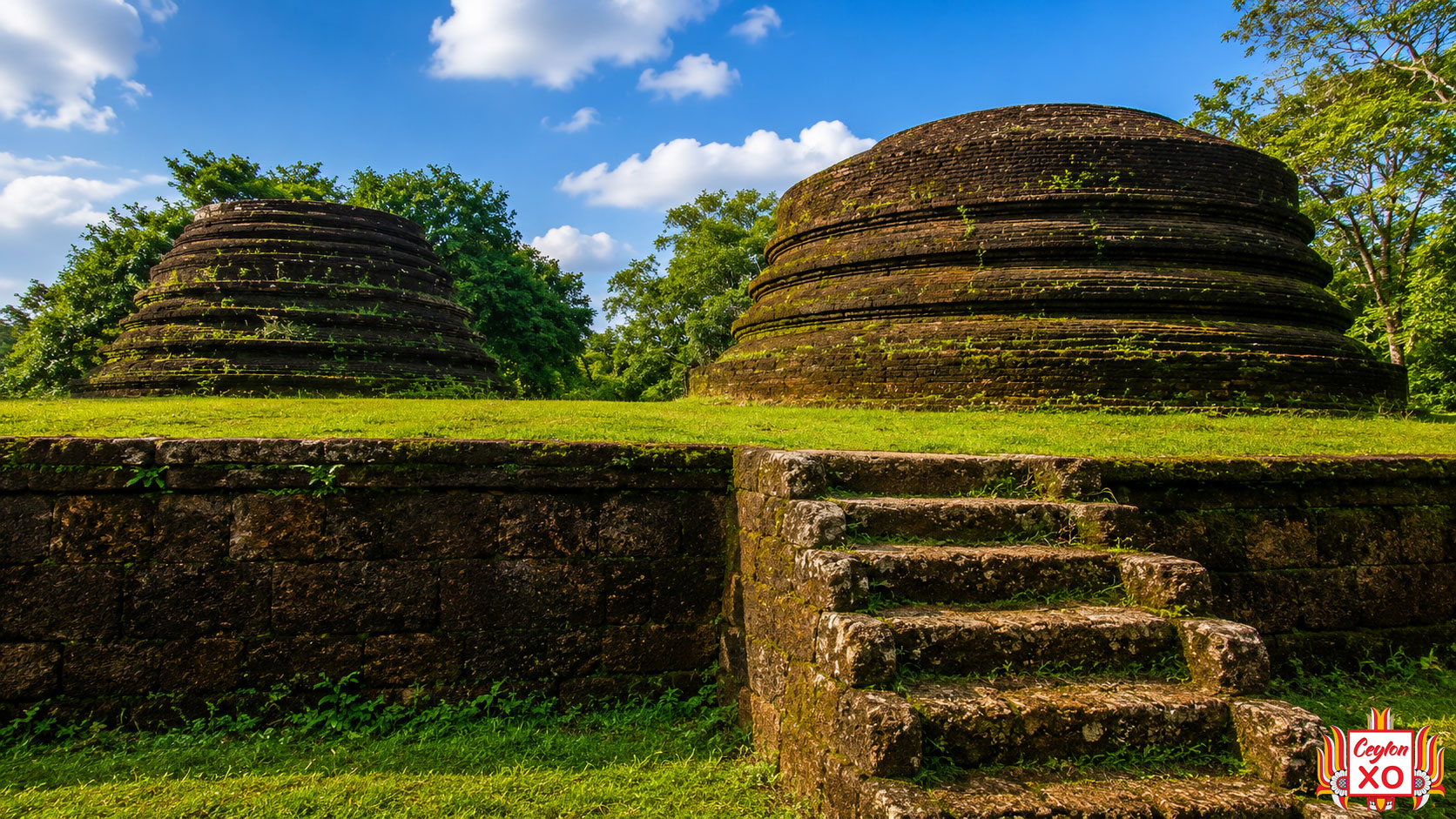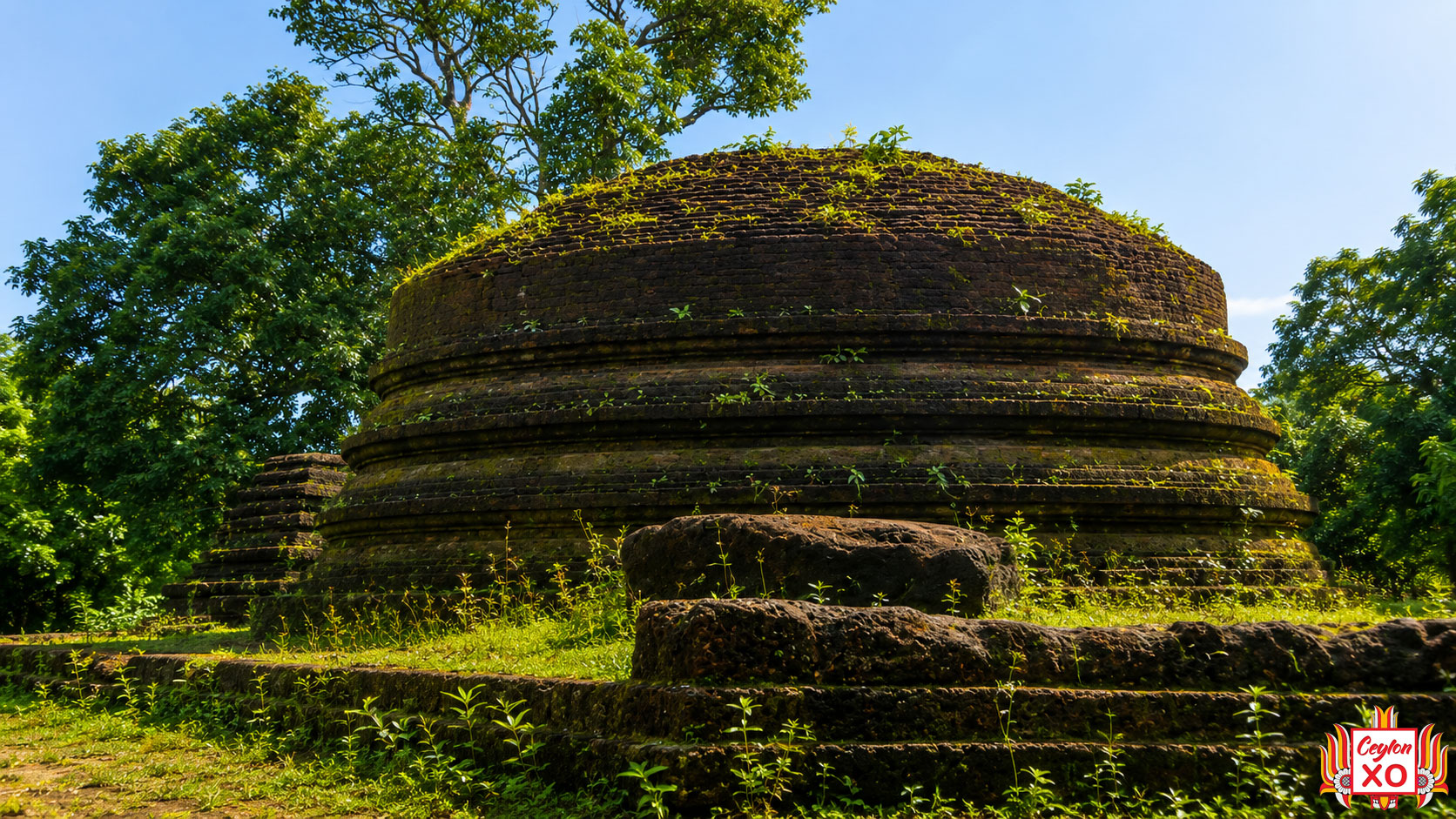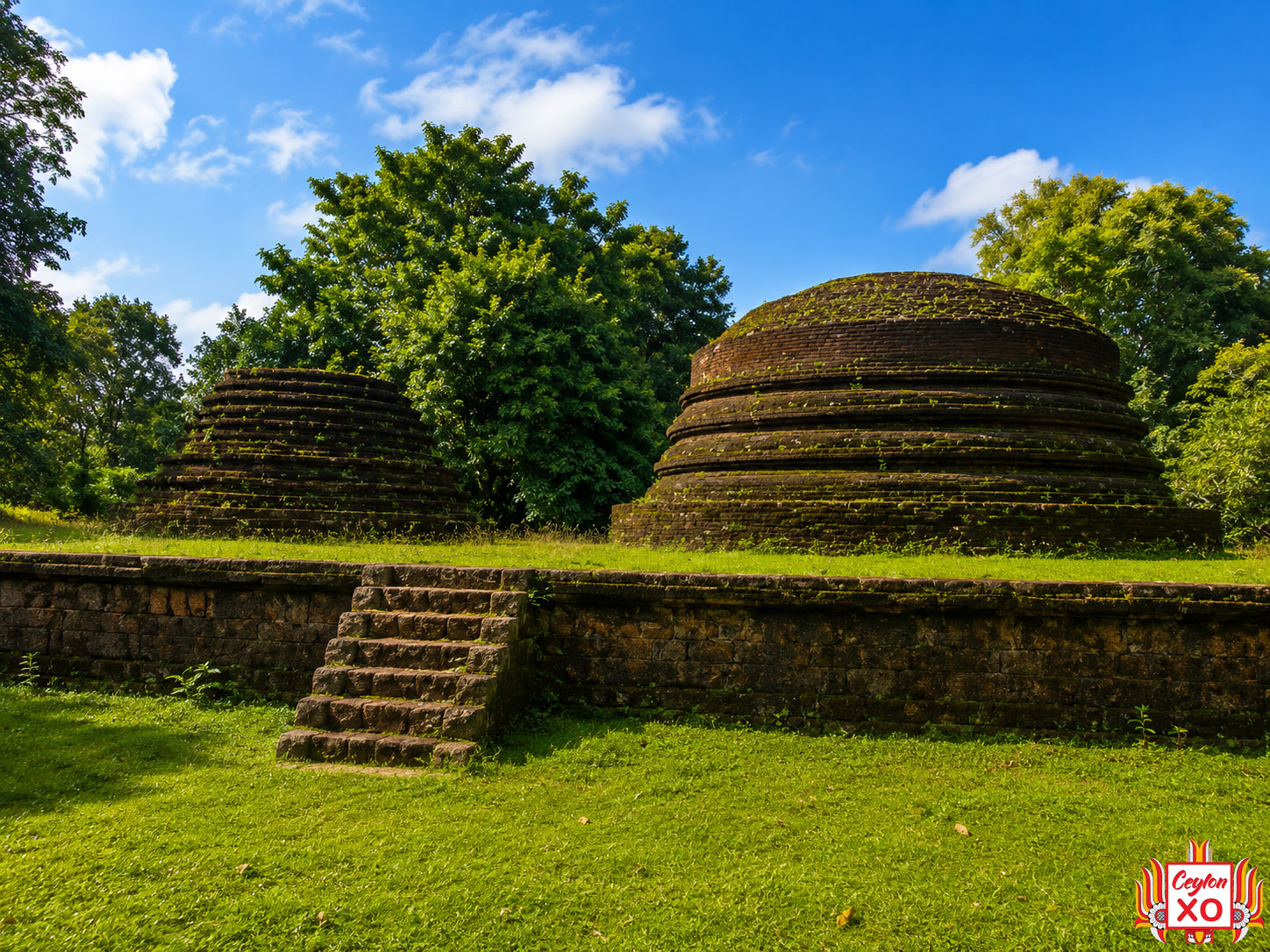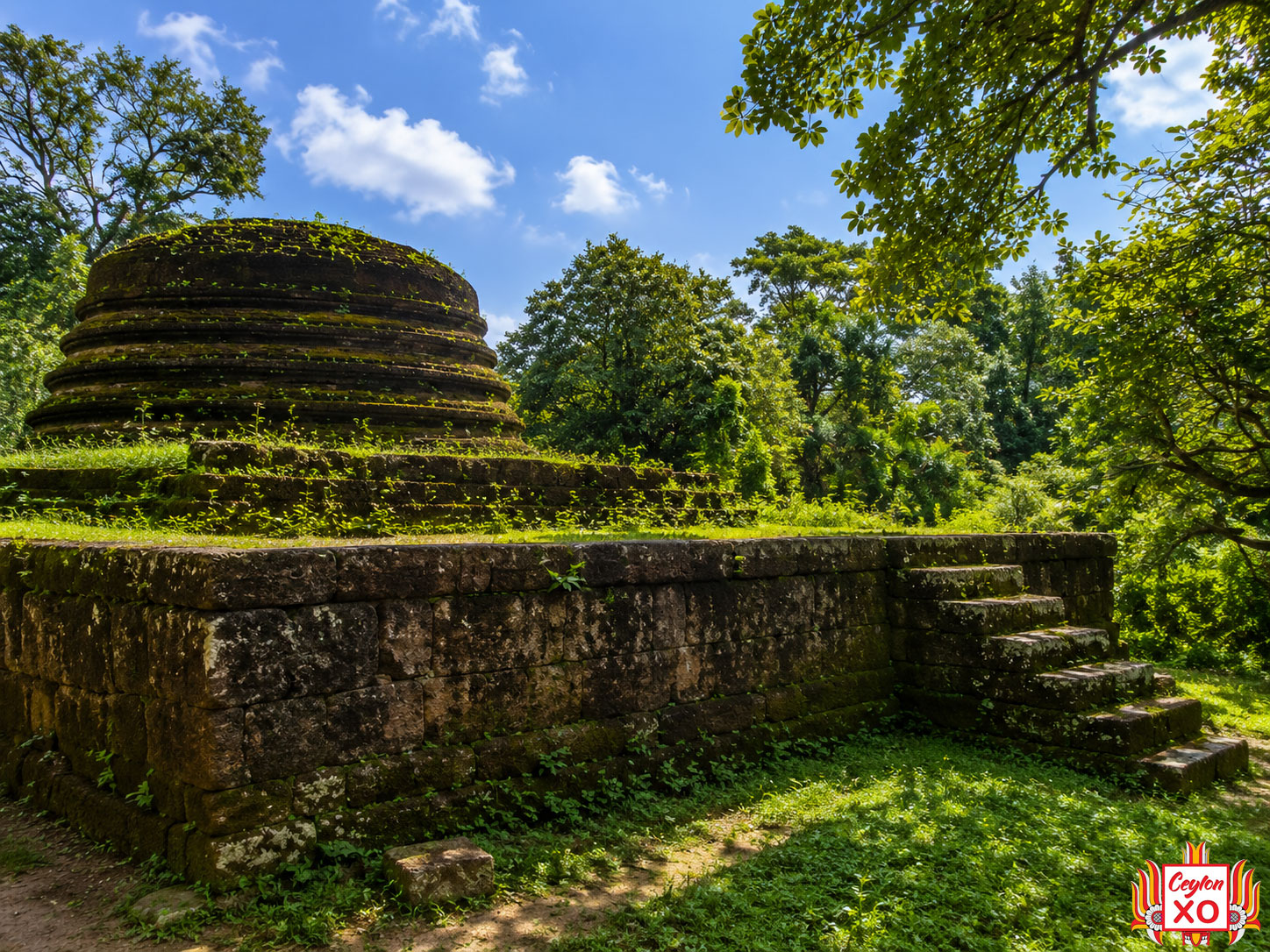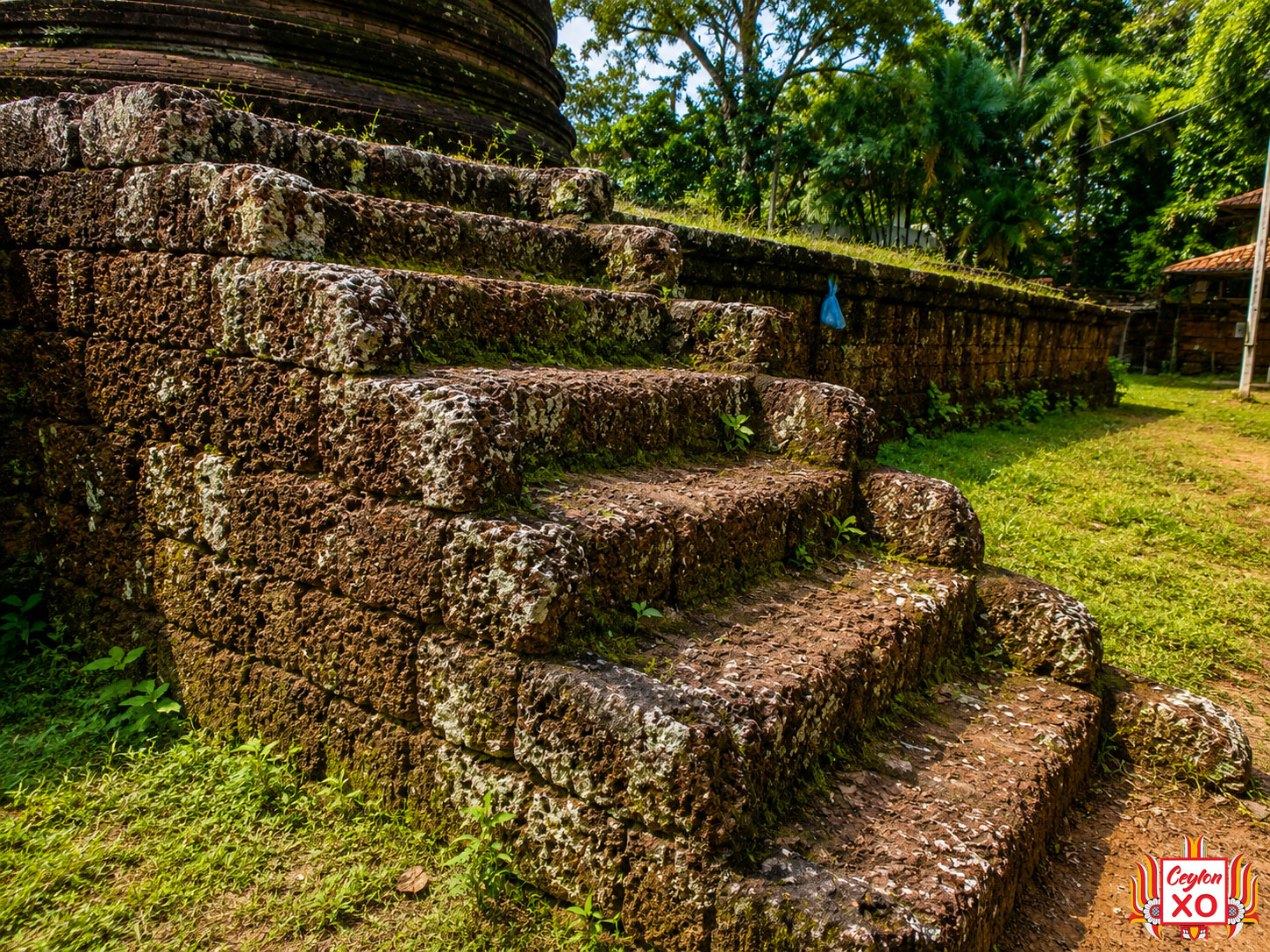
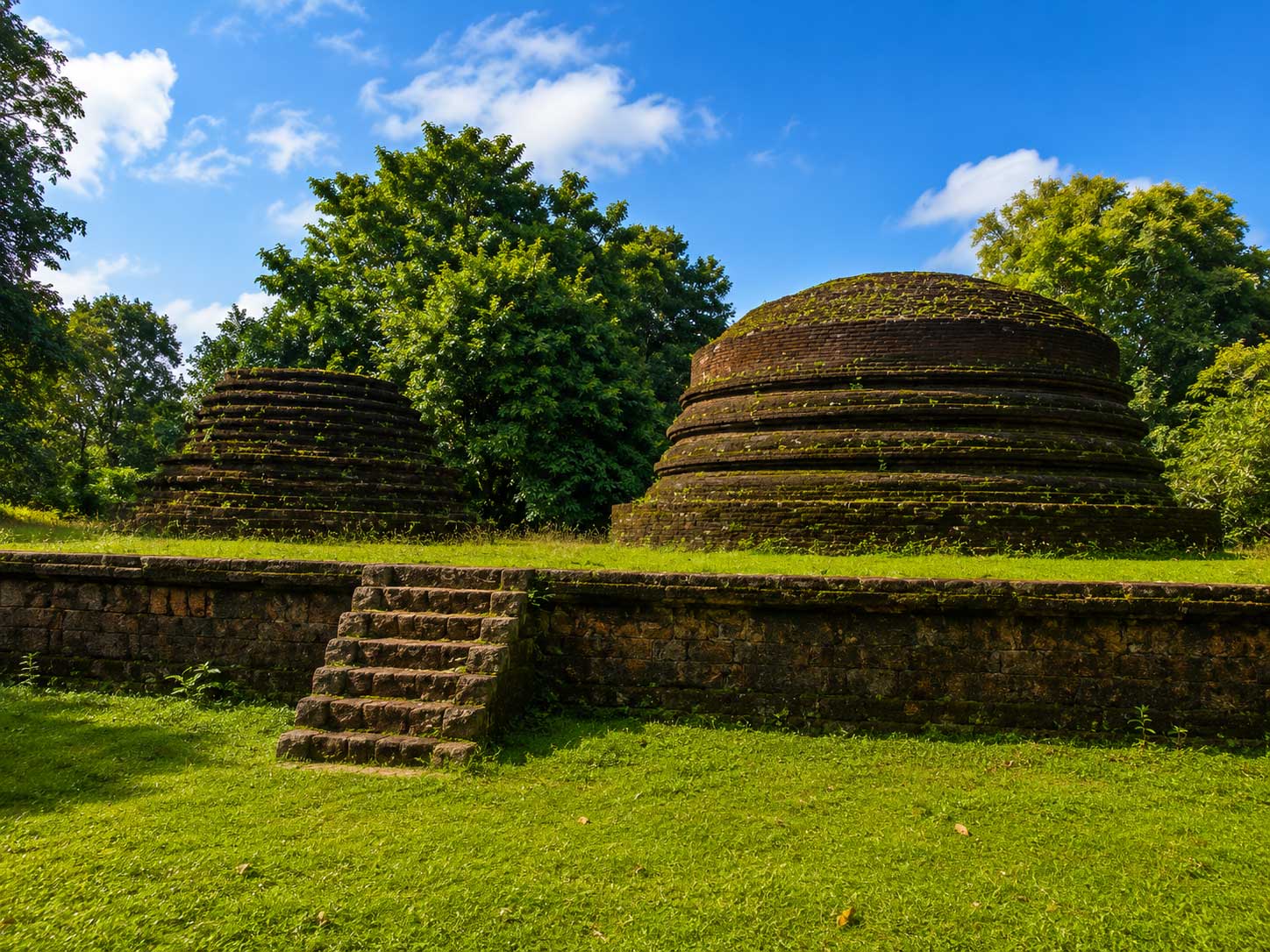
The most prominent features of the site are two small stupas measuring approximately 30 feet and 24 feet in diameter. Each stupa has three circular base rings and is built on a rectangular raised platform. Stone steps made of laterite blocks are found on the northern and western sides of the platform, providing access to the structure. Archaeological evidence also suggests the presence of the foundation of a shrine room that once stood on the platform.
The history and purpose of these ruins have been the subject of several interpretations. Some believe that the remains belonged to an ancient Buddhist temple, while others suggest they were associated with the ancient Kataragama Devalaya. However, archaeologist Mr. Senerath Paranawitharana proposed that these ruins are the tomb monuments of King Parakramabahu VI and his queen, Ran Manika, who ruled during the Kotte Kingdom from 1412 to 1467 AD.
The decline of the site began after the Portuguese gained control of the maritime provinces during the late 16th century. The loss of royal patronage dealt a severe blow to Buddhism, causing many temples and religious monuments to be neglected. Veherakanda Archaeological Site was eventually abandoned and gradually became covered by dense vegetation, remaining hidden for many years until archaeological interest helped bring attention back to this important historical landmark.